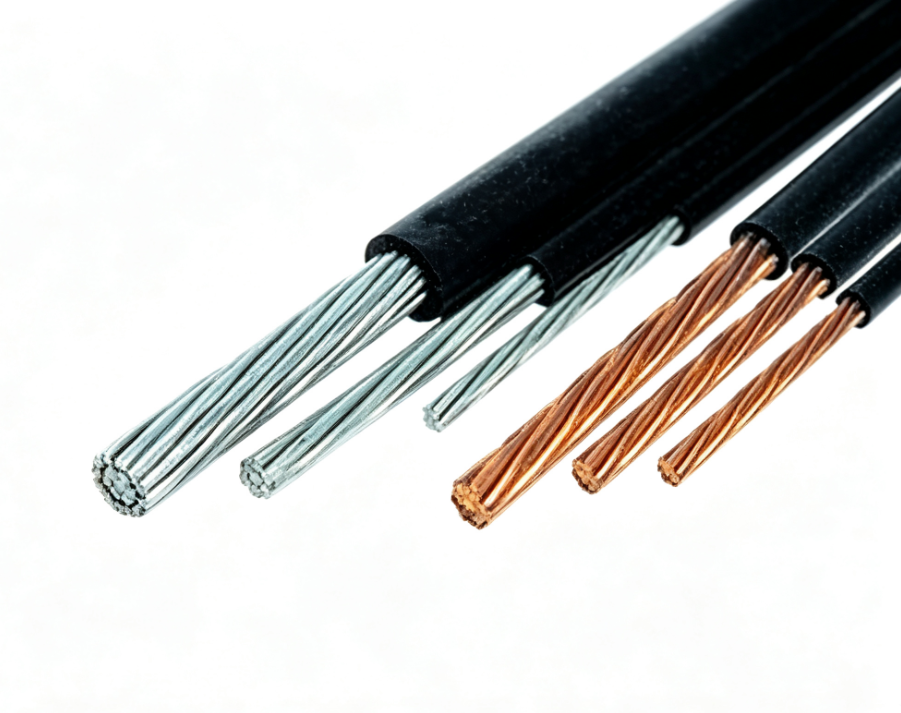
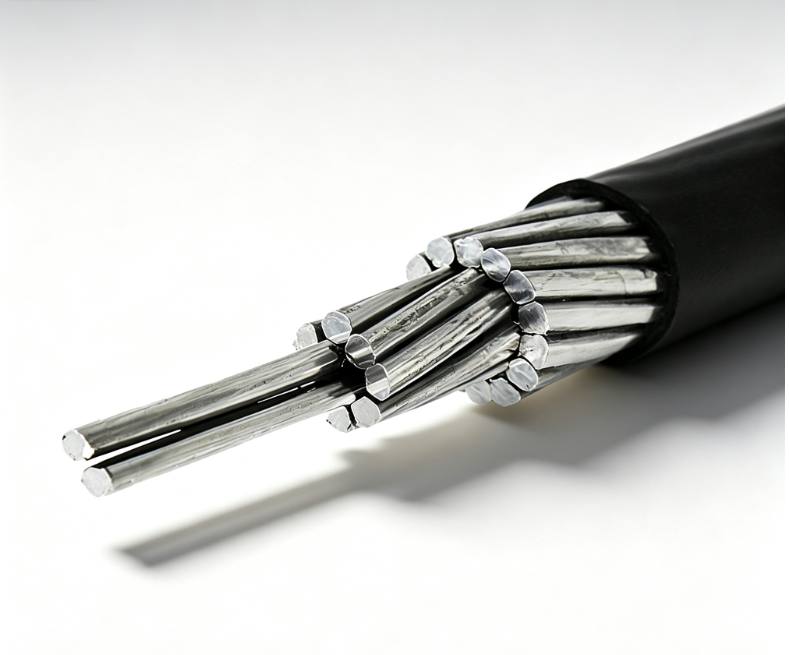
Suitable for overhead power distribution lines with rated voltage ranging from 0.6/1kV to 10kV, installed on outdoor utility poles for power transmission in towns, villages and industrial zones.
Compared with bare conductors, the cable improves operational safety, reduces short-circuit and electric shock hazards, and lowers the risk of power outages caused by tree contact. It is widely used for urban line renovation, rural power grids and overhead distribution outside industrial plants.

1996
160000㎡
10+Years
No.33+
Aerial Insulated Cables can be useful in overhead distribution projects where the electrical network needs to pass through areas with limited corridor space, vegetation, buildings, or other nearby infrastructure. Compared with bare overhead conductors, insulated construction provides an additional layer of protection around the energized conductor, which can support safer network planning and reduce the risk associated with accidental contact with surrounding objects.
For utility contractors, electrical distributors, infrastructure developers, and project procurement teams, cable selection should be based on the actual line configuration rather than conductor size alone. Span length, mechanical loading, ambient conditions, installation hardware, voltage level, current demand, and local technical requirements should all be considered before confirming the cable specification.
The insulation of an overhead cable is exposed to changing outdoor conditions throughout its service life. Solar radiation, temperature cycling, rain, humidity, wind, pollution, and mechanical movement can all affect the external insulation system. A suitable material needs to maintain its electrical and mechanical properties under the environmental conditions specified for the installation.
For long-term procurement programs, it is useful to distinguish between the basic electrical rating of the cable and its environmental performance. A cable may meet a voltage requirement while still requiring additional evaluation for UV exposure, temperature range, weather resistance, mechanical stress, or installation conditions. These factors should be included in the technical specification instead of being left to assumptions.
| Outdoor condition | Cable performance to evaluate |
| UV radiation | Long-term resistance of insulation and sheath materials |
| High temperature | Thermal rating and current-carrying capability |
| Rain and humidity | Moisture and weather resistance |
| Wind and vibration | Mechanical strength and fatigue resistance |
| Polluted atmosphere | Surface durability and insulation performance |
When buyers search for an ISO9001 Overhead Insulated Cable, it is important to understand that ISO 9001 primarily concerns the manufacturer's quality management system rather than acting as a direct product-performance certificate. A quality management system can establish controlled procedures for production, inspection, documentation, corrective actions, traceability, and continuous improvement, while the cable itself must still comply with the applicable product standards and technical specifications.
For large procurement projects, ISO 9001 certification can be one useful part of supplier qualification. Purchasing teams should also review product test reports, technical datasheets, inspection procedures, material specifications, production controls, and applicable product certifications. This creates a more complete evaluation of both manufacturing consistency and product suitability.
The distance between supporting structures affects the mechanical loading experienced by an overhead cable. Longer spans can produce greater sag and mechanical stress, while wind, ice, temperature changes, and conductor weight can further influence the tension within the system. Cable selection and installation design should therefore be coordinated with the supporting poles, fittings, and local environmental conditions.
For project planning, the cable's electrical characteristics should not be considered independently from its mechanical characteristics. The appropriate conductor construction, allowable tension, installation tension, sag requirements, and support hardware should be assessed together. This is particularly important when an overhead line crosses roads, open areas, industrial facilities, or other locations where clearance requirements are critical.
An overhead insulated cable generates heat when current flows through its conductor. The allowable operating current depends on conductor resistance, ambient temperature, solar heating, insulation temperature limits, installation configuration, and other applicable factors. Using a nominal current rating without considering the actual environment can result in an inaccurate assessment of thermal performance.
For utility projects and industrial distribution networks, engineering teams should calculate or verify the cable's ampacity under the expected operating conditions. Where multiple circuits are installed in the same area, the interaction between conductors and nearby equipment may also need consideration. The objective is to maintain adequate thermal margin during normal operation while meeting the required electrical performance.
| Parameter | Influence on cable capacity |
| Conductor cross-section | Affects electrical resistance and heat generation |
| Ambient temperature | Higher temperatures reduce available thermal margin |
| Solar radiation | Can increase the cable's external temperature |
| Operating current | Directly affects conductor heat generation |
Urban expansion and industrial development can make overhead line corridors increasingly difficult to plan. Buildings, vegetation, roads, existing utilities, and property boundaries may limit the available space for new distribution infrastructure. Insulated overhead cable systems can provide an alternative design approach where the applicable electrical and mechanical requirements permit their use.
However, insulated construction does not eliminate the need for correct clearances, supporting hardware, maintenance access, and installation practices. Project engineers should establish the required separation distances and mechanical arrangement according to the relevant standards and local regulations. Cable insulation should be treated as an additional protective feature, not as a substitute for proper line design.
Wuxi Xinyu Cable Co., Ltd. was established in 1996 and is located on the shores of picturesque Lake Tai. The company operates on a site exceeding 160,000 square metres, including 36,000 square metres of production facilities. Its long-standing cable manufacturing experience supports projects requiring different electrical cable constructions and performance characteristics.
Overhead cables are continuously exposed to outdoor environmental conditions. In addition to sunlight and temperature changes, coastal areas may introduce salt contamination, industrial zones may expose cables to pollutants, and regions with severe weather may subject cables to stronger mechanical loads. A project specification should identify these conditions before the cable construction is finalized.
The insulation and sheath materials should be evaluated for their suitability under the expected exposure. Buyers should also consider the expected service environment when comparing products from different manufacturers because apparently similar cable specifications can differ in material construction, testing scope, and environmental performance.
| Installation environment | Procurement consideration |
| Urban distribution | Space, clearance, nearby structures, and maintenance access |
| Coastal region | Salt, humidity, corrosion, and weather exposure |
| Industrial area | Pollutants, heat, vibration, and mechanical conditions |
| High-wind region | Mechanical strength, span, sag, and support design |
Large electrical infrastructure projects often require several cable categories at the same time. An overhead distribution project may involve insulated cables together with power cables, control cables, fire-resistant products, or shielded cables for different sections of the electrical system. Coordinating multiple specifications requires clear technical documentation and consistent quality management.
Wuxi Xinyu Cable Co., Ltd. has developed a portfolio covering eight major categories and more than 500 varieties. Its products include polyvinyl chloride insulated wires, all-plastic power cables, all-plastic control cables, cross-linked power cables, computer cables, flame-retardant and fire-resistant power cables, flame-retardant and fire-resistant cross-linked power cables, and shielded cables.
The company's manufacturing site exceeds 160,000 square metres, including 36,000 square metres of production facilities. For purchasers sourcing Aerial Insulated Cables, a broad manufacturing portfolio can be useful when different electrical cable specifications need to be coordinated within one project or across multiple procurement programs.
A detailed request for quotation helps suppliers assess both the electrical and mechanical requirements of an overhead cable project. Instead of specifying only the cable name and conductor size, purchasers should provide sufficient project information to allow the manufacturer to recommend or confirm a suitable construction.
For buyers evaluating an ISO9001 Overhead Insulated Cable, supplier assessment should combine quality management credentials with product-specific technical evidence. Wuxi Xinyu Cable Co., Ltd., established in 1996, supported by a manufacturing site exceeding 160,000 square metres. These capabilities, together with the company's more than 500 cable varieties, can be considered alongside the specific technical, quality, and delivery requirements of each project.

Ready To Customise
Your Cable Products?

 +852-68552081


 Language

 English
 русский
 Español
 عربى
عربى