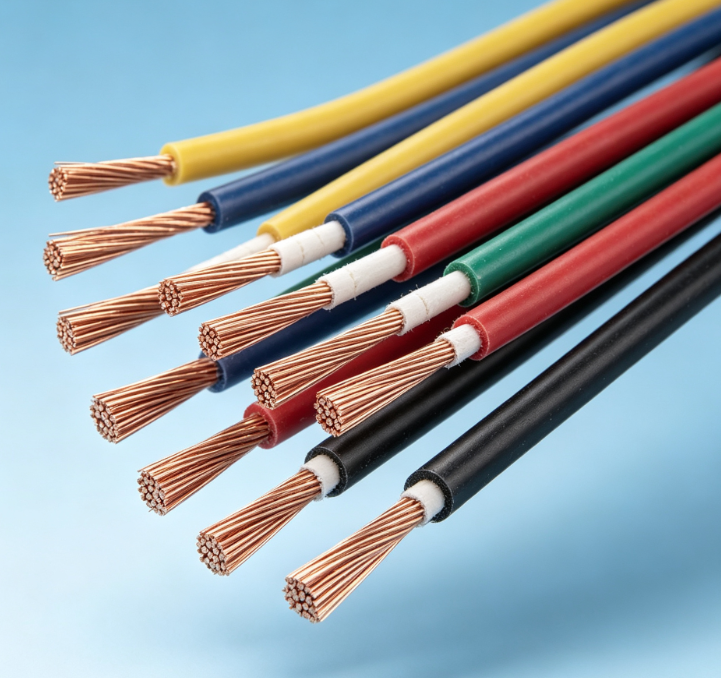
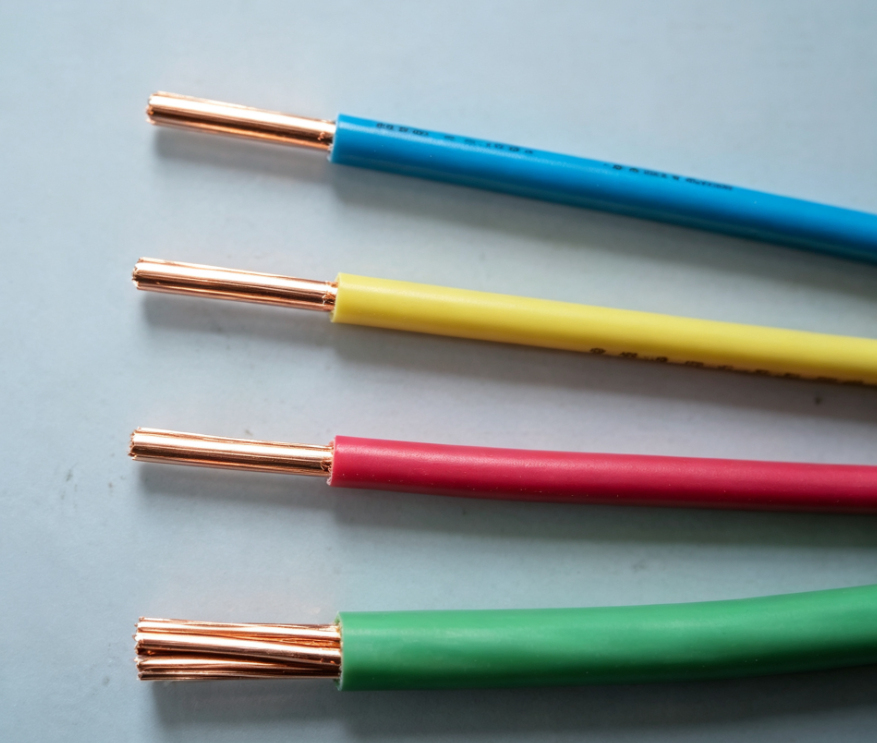
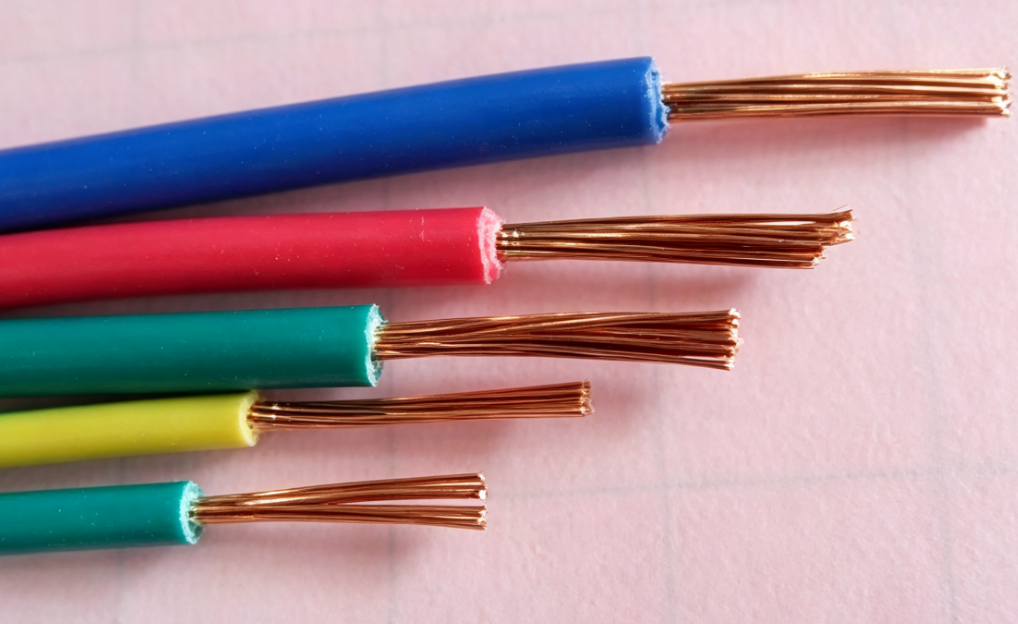
These cables are designed for AC systems with rated voltage U₀/U up to 450/750 V. They are applied for fixed wiring inside buildings, power and lighting circuits, as well as internal & external connections of electrical equipment, household appliances, instruments and meters. Widely adopted in residential buildings, commercial complexes, factories and municipal low-voltage terminal distribution.

1996
160000㎡
10+Years
No.33+
PVC Cable selection for industrial electrical systems involves more than choosing a conductor according to its nominal cross-sectional area. The insulation material must also match the voltage level, installation environment, expected temperature, mechanical exposure, and applicable project requirements. Polyvinyl chloride is widely used for cable insulation and sheathing because it can provide a practical combination of electrical insulation, mechanical protection, processability, and cost control.
For electrical contractors, equipment manufacturers, system integrators, and project procurement teams, the suitability of Plastic Insulated Cables should be evaluated according to the complete application. A cable installed inside a control cabinet, underground conduit, cable tray, industrial workshop, or outdoor electrical system may require different construction details even when the basic conductor size is similar.
The temperature of a cable conductor is influenced by electrical current, ambient conditions, installation method, heat dissipation, and the thermal characteristics of the insulation system. As conductor temperature rises, electrical resistance generally increases, which can contribute to higher power losses. At the same time, the insulation and sheath must remain within their specified operating temperature limits.
For projects with continuous high loads, cables installed in enclosed spaces or bundled together may require particular attention to heat dissipation. Simply increasing conductor size is not always the only consideration. Installation spacing, cable grouping, ambient temperature, and the thermal characteristics specified for the cable should also be evaluated.
| Factor | Why it matters |
| Load current | Determines the amount of heat generated by conductor resistance |
| Ambient temperature | Affects the available thermal margin |
| Cable grouping | Multiple loaded cables can reduce heat dissipation |
| Installation method | Changes how efficiently heat can escape from the cable |
PVC insulation can be used across different cable constructions, but the required design depends strongly on the function of the circuit. Power circuits primarily require appropriate current-carrying capacity and electrical insulation, while control circuits may place greater emphasis on conductor identification, flexibility, shielding, signal integrity, and resistance to electrical interference.
This distinction is useful when specifying Plastic Insulated Cables for factories and equipment. A production line may contain power cables for motors, control cables for automation equipment, computer cables for data-related systems, and shielded cables for circuits that require improved protection against electromagnetic interference. Each cable should be selected according to its actual electrical role rather than applying one construction throughout the facility.
For large electrical projects, installation efficiency can have a substantial impact on overall project cost. Cable construction affects pulling behavior, bending requirements, termination work, routing, and the amount of space required in trays or conduits. A technically suitable cable can still create installation difficulties if its construction does not match the available routing environment.
Project engineers should therefore consider conductor flexibility, outer diameter, minimum bending radius, cable weight, and termination requirements before finalizing the cable specification. These details are particularly important when hundreds or thousands of metres of cable are installed across a production facility or infrastructure project.
| Construction consideration | Installation impact |
| Outer diameter | Influences conduit and cable tray capacity |
| Bending radius | Determines how tightly the cable can be routed |
| Cable weight | Affects pulling equipment and support spacing |
| Conductor flexibility | Can influence termination and routing efficiency |
In industrial buildings, transportation facilities, commercial complexes, and other enclosed environments, fire performance can become an important part of cable selection. A standard PVC cable and a flame-retardant cable should not automatically be treated as interchangeable because project specifications may define particular requirements for flame propagation, smoke, fire resistance, or circuit integrity.
The required performance should be determined from the installation environment and the relevant project codes or standards. Procurement teams should review the exact test method and certification or test documentation rather than relying solely on general descriptions such as "fire resistant" or "flame retardant."
When electrical cables are purchased for a large industrial or infrastructure project, consistency between production batches becomes particularly important. Differences in conductor resistance, dimensions, insulation thickness, mechanical properties, or outer sheath characteristics can complicate installation and inspection when cable quantities are substantial.
A systematic quality-control process should cover raw material verification, conductor production, insulation extrusion, dimensional inspection, electrical testing, and finished-product evaluation. Traceability is also valuable because it allows project teams to connect delivered cable drums with production information and inspection records when questions arise during installation or acceptance.
Wuxi Xinyu Cable Co., Ltd. has been engaged in electrical wire and cable manufacturing since 1996. Located on the shores of picturesque Lake Tai, the company operates on a site exceeding 160,000 square metres, including 36,000 square metres of production facilities.
Cable acceptance becomes more efficient when the technical specification is written in measurable terms. Instead of describing a cable only as a "high-quality PVC cable," project documents can identify conductor material, nominal cross-sectional area, voltage rating, insulation material, sheath requirements, applicable standards, testing requirements, packaging, and identification information.
This approach allows incoming inspection teams to compare delivered products against predefined technical criteria. It also reduces ambiguity between the manufacturer's quotation, approved sample, production batch, and final delivered product. For projects involving multiple cable types, consistent documentation is especially useful for maintaining traceability throughout installation.
| Acceptance item | What can be checked |
| Product identification | Product type, size, batch, drum marking, and documentation |
| Dimensional characteristics | Conductor and insulation dimensions against specification |
| Electrical properties | Resistance, insulation, and other specified electrical tests |
| Physical condition | Surface condition, packaging, and signs of transportation damage |
Large facilities rarely depend on a single cable construction. Power distribution, automation, data transmission, fire protection, and equipment control can all require different cable characteristics. A manufacturer with a broad product portfolio can make technical coordination easier when several cable categories need to be sourced for one engineering project.
Wuxi Xinyu Cable Co., Ltd. produces more than 500 varieties across eight major categories, including polyvinyl chloride insulated wires, all-plastic power cables, all-plastic control cables, cross-linked power cables, computer cables, flame-retardant and fire-resistant power cables, flame-retardant and fire-resistant cross-linked power cables, and shielded cables. This range covers applications extending beyond standard PVC Cable requirements and allows different cable functions to be considered within a wider manufacturing portfolio.
With a production site exceeding 160,000 square metres, including 36,000 square metres of production facilities, Wuxi Xinyu Cable Co., Ltd. has established a manufacturing base for handling diverse electrical wire and cable requirements. More than 150 employees hold senior professional titles, adding experienced technical personnel to the company's production and engineering capabilities.
The maintenance requirements of a Plastic Insulated Cable depend strongly on its operating environment. Cables installed in areas with high temperatures, mechanical vibration, moisture, chemicals, or frequent equipment movement may experience different aging mechanisms from cables installed in clean, protected electrical rooms.
Maintenance teams can improve reliability by keeping records of cable routes, circuit loads, installation dates, inspection results, and any abnormal operating conditions. During scheduled inspections, visible sheath damage, discoloration, unusual heating, loose terminations, or signs of mechanical stress should be investigated before they develop into more serious electrical problems.
For facilities with extensive cable networks, preventive maintenance is particularly valuable because replacing a failed cable may involve production downtime, equipment isolation, access restrictions, and additional labor. Selecting the appropriate cable construction at the design stage can therefore contribute to more predictable maintenance requirements throughout the operating life of the installation.
Cable specifications can become increasingly detailed when a project combines different voltage levels, installation environments, fire-performance requirements, control circuits, and special cable constructions. In these situations, manufacturer experience can be useful for reviewing technical requirements, identifying incompatible specifications, and matching the requested construction with an appropriate production process.
Wuxi Xinyu Cable Co., Ltd. was established in 1996 and has developed a product portfolio covering more than 500 varieties across eight major categories. Its products include polyvinyl chloride insulated wires, all-plastic power cables, all-plastic control cables, cross-linked power cables, computer cables, flame-retardant and fire-resistant power cables, flame-retardant and fire-resistant cross-linked power cables, and shielded cables.
For engineering teams evaluating PVC Cable and related plastic insulated constructions, the company's more than 160,000-square-metre site, 36,000-square-metre production facilities, provide a manufacturing background that can support projects requiring different cable categories and technical specifications.

Ready To Customise
Your Cable Products?

 +852-68552081


 Language

 English
 русский
 Español
 عربى
عربى