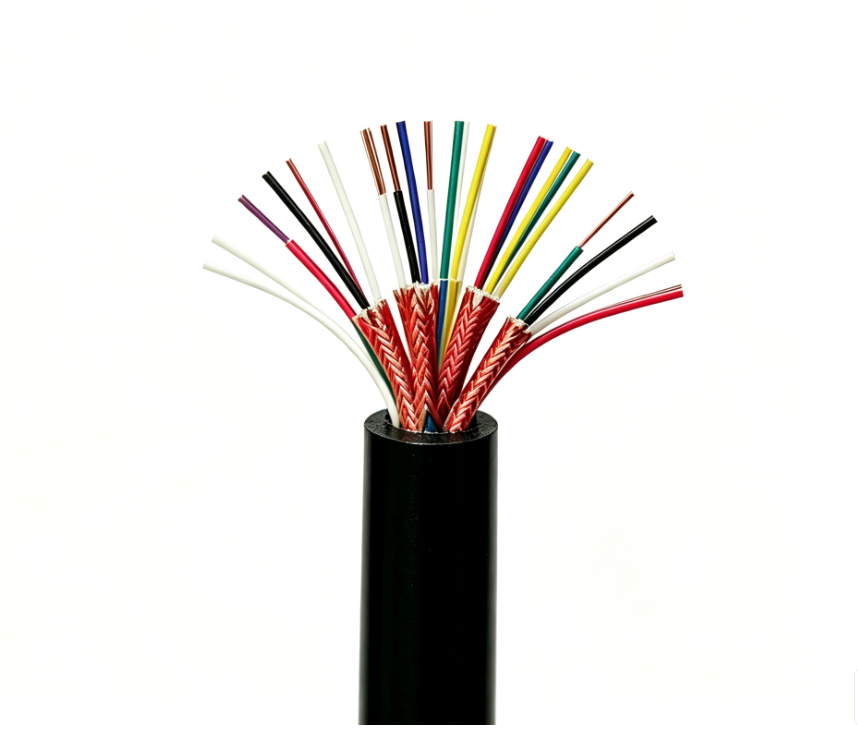
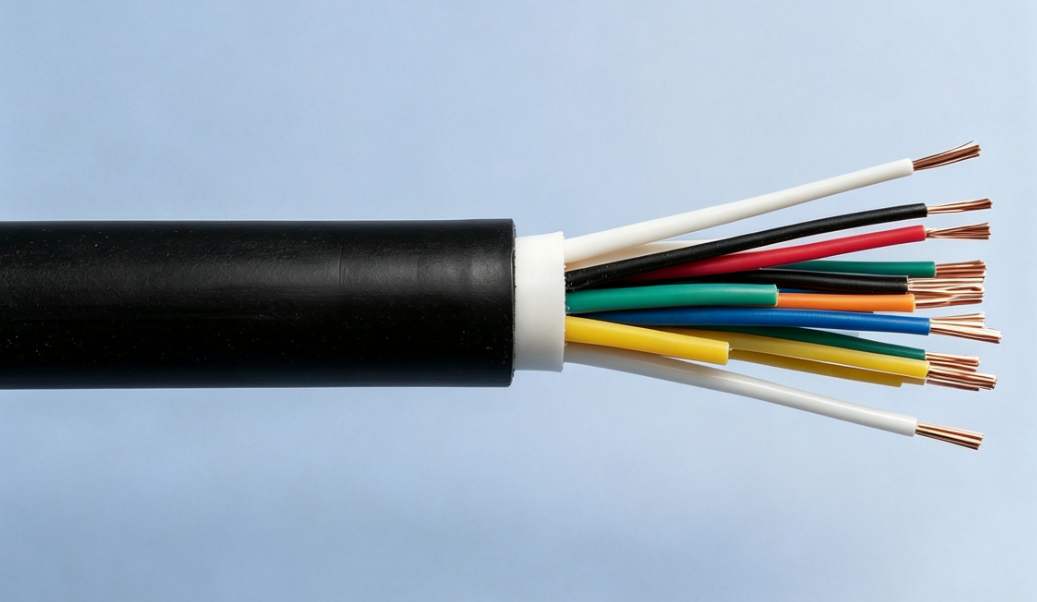
Suitable for signal transmission between automatic instruments, computer control systems and data acquisition devices at rated voltage up to 300/500V.
With great anti-interference performance, it effectively reduces signal distortion caused by external electromagnetic interference. Widely applied in petrochemical, power, metallurgy, building automation, sewage treatment and other industrial automatic control fields for transmission of analogue signals and digital control signals.

1996
160000㎡
10+Years
No.33+
Computer Cables used in industrial environments need to be evaluated according to the actual signal-transmission conditions rather than simply by their appearance or conductor count. Data-related cable systems may operate near motors, power supplies, control equipment, frequency converters, and other sources of electromagnetic interference. Cable construction, shielding, conductor arrangement, insulation, and installation method can therefore influence communication stability.
For equipment manufacturers, system integrators, distributors, and engineering procurement teams, the technical specification should identify the intended transmission environment before selecting a cable. Factors such as transmission distance, installation location, temperature, electromagnetic noise, cable routing, and required service life can all affect the appropriate construction.
Electromagnetic interference is a common concern when data or computer cables are installed close to power equipment. Motors, inverters, switching power supplies, relays, and high-current cables can generate electromagnetic fields that may couple into nearby signal circuits. The resulting interference can appear as unstable communication, data errors, intermittent signals, or reduced system reliability.
A shielded Computer Cable can provide an additional barrier against external electromagnetic interference, but the effectiveness of the complete system depends on more than the cable itself. Shield continuity, grounding, connector construction, cable routing, and separation from noise-generating equipment should all be considered during installation.
The internal arrangement of conductors can influence electromagnetic coupling and signal quality. In many communication-oriented cable designs, conductors are arranged or paired in ways that help reduce interference between circuits. Maintaining the intended geometry during stripping, termination, and connection is therefore important, especially when the cable is used for sensitive data transmission.
For procurement teams, the cable specification should describe the required conductor arrangement rather than only stating the number of cores. When cables are used in control systems, monitoring equipment, industrial computers, measurement systems, or data acquisition networks, compatibility between the cable construction and the connected equipment should be confirmed before mass purchasing.
| Cable characteristic | Potential importance |
| Conductor arrangement | Influences signal coupling and transmission stability |
| Shielding | Helps reduce external electromagnetic interference |
| Insulation | Provides electrical separation and environmental protection |
| Outer sheath | Protects internal components from external conditions |
Computer and data cables installed in industrial facilities can face more mechanical stress than cables located inside protected equipment cabinets. Cable trays, machine interfaces, production lines, and equipment connections may expose cables to vibration, abrasion, repeated movement, and accidental contact with tools or machinery.
The appropriate mechanical construction depends on the installation method. A fixed cable route may require a different structure from a cable installed in a moving cable carrier. For repeated movement, factors such as bending radius, travel distance, bending frequency, tensile stress, and operating temperature should be considered before selecting the cable.
Longer cable routes introduce additional electrical characteristics that can influence signal transmission. Conductor resistance, capacitance, inductance, impedance, attenuation, and external interference can become increasingly relevant as transmission distance increases. The acceptable performance depends on the specific communication technology and equipment connected to the cable.
When specifying Computer Cables for a large industrial project, the total cable route should be identified before procurement. A supplier should receive information about the expected cable length, signal type, operating environment, installation arrangement, and connected equipment. This helps prevent the use of a generic cable for an application requiring more specific transmission characteristics.
| Project factor | Why it matters |
| Short cable route | Generally easier to manage signal attenuation and installation conditions |
| Long cable route | Requires closer evaluation of transmission characteristics and interference |
| High-noise environment | Shielding and cable routing become more important |
| Mixed power and data installation | Requires careful separation and electromagnetic compatibility planning |
Industrial data cables may operate in environments containing moisture, oil, dust, chemicals, temperature fluctuations, and mechanical vibration. These conditions can gradually affect the insulation and outer sheath if the cable materials are not appropriate for the application.
Procurement specifications should therefore identify the actual environment rather than simply describing the cable as an industrial computer cable. If the cable is installed outdoors, exposed to oil, routed through a high-temperature area, or placed near chemical processing equipment, the manufacturer should be informed so that the appropriate cable construction can be evaluated.
Wuxi Xinyu Cable Co., Ltd. has been engaged in electrical wire and cable manufacturing since 1996. Located on the shores of picturesque Lake Tai, the company occupies a site exceeding 160,000 square metres, including 36,000 square metres of production facilities.
Large industrial facilities rarely require only one type of cable. A single project may involve power distribution cables, control cables, computer cables, shielded cables, fire-resistant cables, and other specialized products. Coordinating these different cable categories can simplify technical communication, quality management, inventory control, and project scheduling.
Wuxi Xinyu Cable Co., Ltd. has developed a product portfolio covering eight major categories and more than 500 varieties. Its product range includes polyvinyl chloride insulated wires, all-plastic power cables, all-plastic control cables, cross-linked power cables, computer cables, flame-retardant and fire-resistant power cables, flame-retardant and fire-resistant cross-linked power cables, and shielded cables. This range allows different cable requirements to be considered within a broader manufacturing portfolio.
For purchasers managing multiple cable specifications, supplier capability should be evaluated through technical documentation, production capacity, quality control, customization capability, packaging, delivery schedules, and product consistency. A broad product portfolio can be particularly useful when several cable types need to be coordinated for the same industrial project.
A detailed request for quotation can help manufacturers provide a more accurate technical and commercial proposal. Instead of requesting a cable only by a general product name, purchasers should provide the electrical application, installation conditions, transmission requirements, and documentation expectations.
Wuxi Xinyu Cable Co., Ltd. combines more than 30 years of manufacturing experience with a production site exceeding 160,000 square metres. With a product portfolio covering more than 500 varieties, the company has manufacturing resources for different electrical and cable applications. When sourcing Computer Cables, purchasers can evaluate these capabilities together with the specific technical requirements, documentation, quality expectations, and delivery conditions of the project.
For equipment manufacturers and large installation projects, cable orders are often delivered in multiple batches. Maintaining consistent conductor dimensions, insulation characteristics, cable diameter, shielding construction, and labeling between batches can simplify installation and quality inspection. Uncontrolled specification changes can create compatibility issues, especially when cables are terminated using standardized connectors or installed into predefined cable management systems.
Before mass production, purchasers can establish an approved product specification and request technical documentation or samples for confirmation. Any subsequent changes in materials, construction, production location, or critical dimensions should be communicated and evaluated according to the agreed quality procedure.
For long-term procurement programs, consistent specifications combined with clear technical communication can make Computer Cables easier to manage across different production lines, installation phases, and equipment projects.

Ready To Customise
Your Cable Products?

 +852-68552081


 Language

 English
 русский
 Español
 عربى
عربى