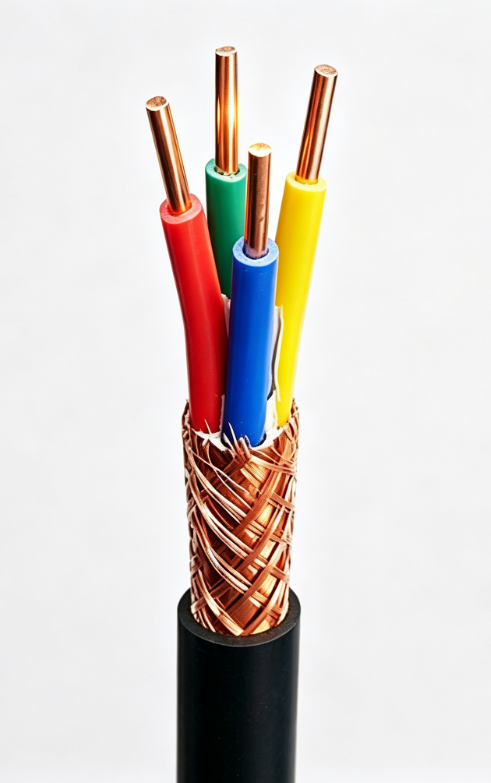
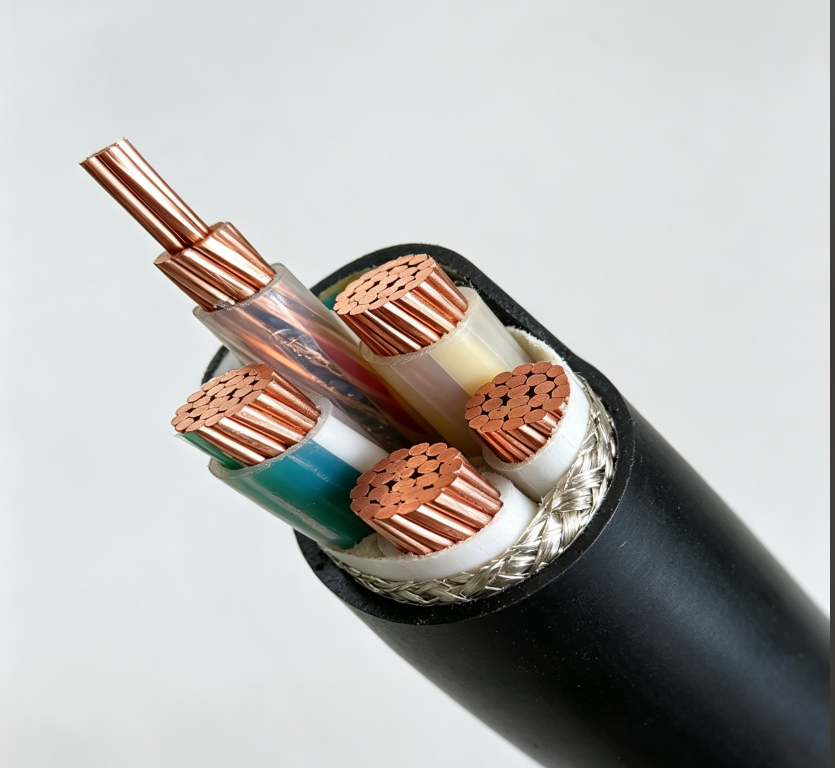
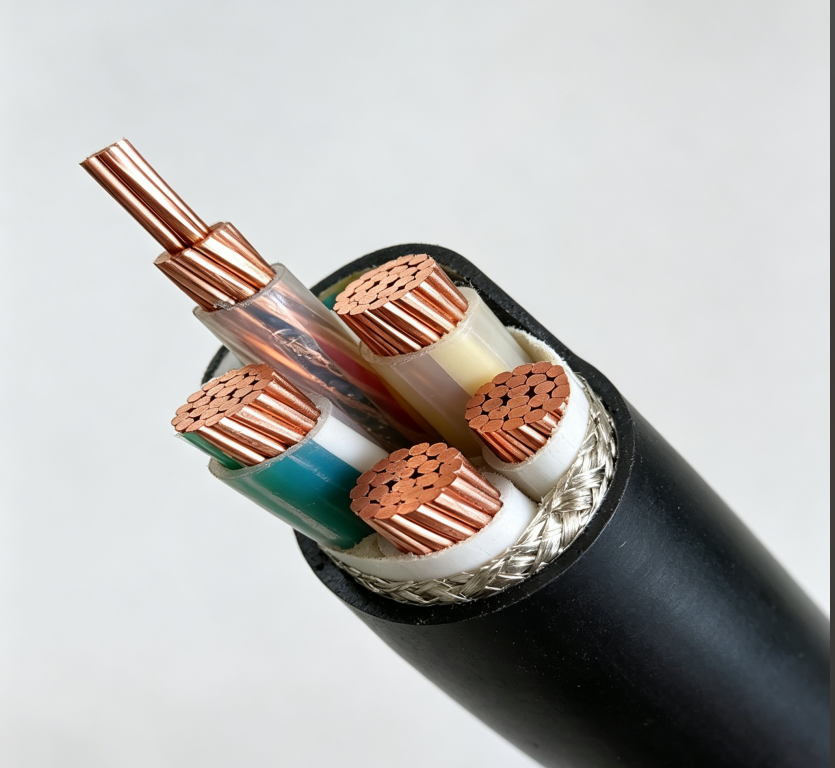
Control Cables are used for transmitting control signals, measurement signals, and low-power electrical commands between equipment and systems. They are widely applied in industrial automation, machinery control panels, power plants, and building management systems, where accurate and stable signal transmission is required. These cables connect control units with motors, sensors, relays, and other electrical devices, supporting coordinated operation across different parts of a system.
In terms of structure, control cables are designed with multiple cores, flexible conductors, and reliable insulation to support complex wiring layouts and frequent routing in confined spaces. Depending on the application environment, they may include additional features such as screening or shielding to reduce electromagnetic interference. Material selection and construction focus on durability, electrical stability, and compatibility with standard control voltages, allowing control cables to perform consistently in long-term fixed or semi-flexible installations.

1996
160000㎡
10+Years
No.33+
Control Cables are often installed alongside power cables, sensors, actuators, PLC systems, motors, and other industrial equipment. Their selection should therefore be based not only on the number of cores and conductor size, but also on the type of control signal, installation environment, electrical interference, mechanical movement, and required transmission reliability. A cable designed for fixed equipment may not be suitable for an application involving repeated bending or continuous movement.
For industrial automation projects, the cable structure should correspond to the actual control circuit. Low-current control signals may be particularly sensitive to electromagnetic interference generated by motors, variable-frequency drives, contactors, and switching equipment. Appropriate insulation, shielding, conductor arrangement, and installation practices can help maintain signal integrity and reduce unexpected control-system disturbances.
Electromagnetic interference can become a significant issue when control cables are installed near high-power electrical equipment. Switching devices, motors, transformers, and variable-frequency drives can generate electrical noise that may couple into nearby signal circuits. In sensitive automation systems, this interference can result in unstable signals, false triggering, communication errors, or incorrect equipment responses.
Shielded control cable constructions can help reduce the influence of external electromagnetic fields when properly selected and installed. However, shielding effectiveness depends on more than the presence of a metallic layer. Cable routing, shield continuity, grounding method, connector construction, and separation from power circuits all influence the final system performance.
The number and arrangement of conductors can affect both installation efficiency and electrical performance. Control systems may contain multiple circuits operating at different voltages or serving different functions. A suitable cable construction can help organize these circuits while reducing installation complexity and making identification easier during maintenance.
When selecting Control Cables, buyers should determine whether the cable will carry simple switching signals, analog signals, instrumentation signals, interlocking circuits, or other control functions. Different signal types can have different sensitivity to interference and voltage drop, making conductor arrangement and shielding particularly important for complex automation installations.
| Control application | Important cable consideration |
| Switching circuits | Conductor size, insulation, identification, and voltage rating |
| Analog signals | Shielding, signal integrity, and interference protection |
| Industrial automation | Flexibility, environmental resistance, and reliable transmission |
| Equipment interlocking | Core identification, insulation performance, and circuit organization |
Cable movement is an important factor that is sometimes overlooked during equipment design. A cable installed on a moving machine component may experience thousands or even millions of bending cycles throughout its service life. A construction intended for fixed installation may not have the conductor stranding, insulation flexibility, or mechanical structure required for continuous movement.
For moving applications, the cable should be evaluated according to bending radius, movement direction, travel distance, bending frequency, operating temperature, and the type of cable carrier or guide system. The cable length should also allow sufficient movement without excessive tension or compression.
Control circuits can extend throughout industrial plants, equipment rooms, commercial facilities, and infrastructure systems. When a fire occurs, cable materials can influence flame propagation along cable routes. Flame-retardant cable designs are intended to limit the spread of flame under specified test conditions, helping reduce the possibility of fire traveling rapidly through interconnected cable installations.
Where a control circuit must continue operating during a fire, a fire-resistant construction may be required instead. Flame retardance and fire resistance should not be treated as identical properties. The appropriate requirement should be established according to the applicable standard, building or project specification, and function of the circuit.
Wuxi Xinyu Cable Co., Ltd., established in 1996, is a joint-stock cooperative enterprise specializing in the production of electrical wires and cables. Located on the shores of Lake Tai, the company occupies a site exceeding 160,000 square metres, including 36,000 square metres of production facilities.
Industrial control cables may be exposed to oil, moisture, dust, chemicals, temperature variations, mechanical abrasion, and vibration. The cable's outer sheath and insulation system should therefore be selected according to the actual operating environment. A cable that performs reliably in a clean indoor control cabinet may require different protection when routed through an outdoor production area or harsh industrial environment.
Environmental compatibility also affects long-term maintenance requirements. If the sheath is not appropriate for the surrounding conditions, degradation may occur before the expected service life is reached. Procurement specifications should therefore identify environmental exposure rather than simply stating that the cable is intended for “industrial use.”
| Environment | Cable characteristic to evaluate |
| High temperature | Insulation and sheath temperature rating |
| Oil exposure | Oil resistance of the external materials |
| Moisture | Moisture resistance and suitable sealing arrangements |
| Mechanical abrasion | Sheath durability and mechanical protection |
| Chemical exposure | Chemical compatibility of insulation and sheath |
Even a well-designed control cable can experience performance problems if it is installed incorrectly. Routing is particularly important when control cables share cable trays or conduits with high-power circuits. Electromagnetic coupling can increase when cables are installed close together over long parallel distances, especially in environments containing variable-frequency drives and other switching equipment.
Separating power and control circuits, maintaining appropriate spacing, crossing cables at suitable angles where practical, and using properly grounded shielding can improve system reliability. Cable routing should ideally be considered during the electrical layout stage instead of being treated as an installation detail after equipment has already been positioned.
Large industrial projects often require several types of electrical cables at the same time. A single facility may need power cables for distribution, control cables for automation, computer cables for data-related applications, shielded cables for interference-sensitive circuits, and flame-retardant or fire-resistant cables for safety-related systems. Managing these requirements through multiple suppliers can increase technical communication and procurement complexity.
Wuxi Xinyu Cable Co., Ltd. has developed a portfolio of more than 500 varieties across eight major categories. Its products include polyvinyl chloride insulated wires, all-plastic power cables, all-plastic control cables, cross-linked power cables, computer cables, flame-retardant and fire-resistant power cables, flame-retardant and fire-resistant cross-linked power cables, and shielded cables.
Wuxi Xinyu Cable Co., Ltd. combines broad product coverage with substantial manufacturing resources. For buyers sourcing Control Cables, this product breadth can be useful when multiple cable specifications need to be coordinated within one industrial project or across a long-term procurement program.
A detailed request for quotation helps manufacturers understand the actual application and reduces the risk of receiving a cable that meets the basic electrical specification but does not satisfy the installation requirements. Buyers should provide technical information covering the electrical circuit, mechanical conditions, environmental exposure, and required compliance.
Providing this information allows the manufacturer to assess the complete application rather than quoting solely according to a generic cable name. For international projects, technical drawings and detailed specifications can further improve communication and help ensure that the supplied Control Cables correspond to the project's actual electrical and installation requirements.

Ready To Customise
Your Cable Products?

 +852-68552081


 Language

 English
 русский
 Español
 عربى
عربى