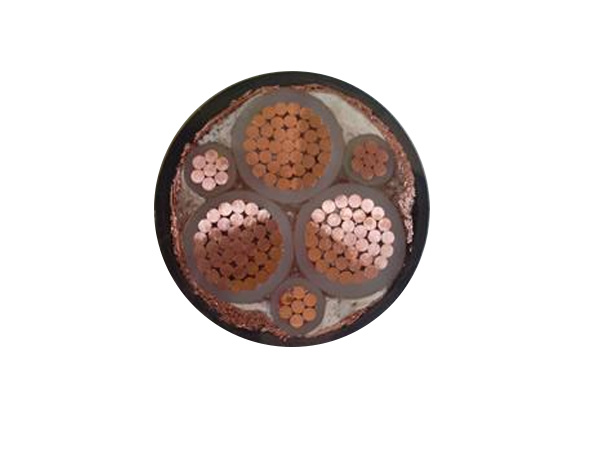
Designed for variable frequency drive systems with rated voltage 0.6/1kV and below, serving as connecting cables between frequency converters and variable-speed motors.
Adopting balanced structure and shielding design, the cable withstands high-frequency PWM pulse voltage, suppresses harmonic waves and electromagnetic interference, reduces motor shaft voltage and operational noise, and ensures stable performance of drive systems. Widely used for CNC machine tools, fans, water pumps, compressors, conveyors, metallurgy, papermaking, textile machinery and industrial automated production lines.

1996
160000㎡
10+Years
No.33+
VFD Cables are designed for the particular electrical conditions created between a variable frequency drive and a motor. Unlike conventional motor power connections, VFD output circuits can contain high-frequency voltage components and rapid switching transitions. These conditions can increase electromagnetic interference, reflected-wave effects, bearing-current risks, and stress on cable insulation when the cable construction is not appropriately selected.
For motor manufacturers, automation contractors, system integrators, electrical distributors, and engineering procurement teams, selecting a Variable Frequency Drive Cable should therefore involve more than checking conductor size and voltage rating. Shielding, insulation system, grounding arrangement, cable geometry, installation length, and the operating characteristics of the drive should all be considered as part of the complete motor-drive system.
A major consideration in VFD installations is electromagnetic interference generated by high-frequency switching. The rapid voltage transitions produced by the drive can create common-mode and differential-mode electrical noise. Without appropriate cable construction and installation practices, this noise can affect nearby instrumentation, communication systems, sensors, control circuits, and other sensitive equipment.
A shielded VFD Cable provides a conductive layer around the insulated conductors that can help control electromagnetic fields and provide a defined path for high-frequency noise currents when correctly terminated and grounded. The shield itself is only one part of the solution. Cable routing, termination quality, grounding connections, motor construction, and drive configuration also influence overall electromagnetic compatibility.
| VFD cable feature | Practical significance |
| Overall shielding | Helps reduce electromagnetic radiation and external interference |
| Symmetrical conductor arrangement | Can help manage common-mode currents and electrical balance |
| Appropriate insulation | Provides electrical separation and resistance to electrical stress |
| Robust outer sheath | Protects the cable during industrial installation and operation |
The effectiveness of a shielded VFD cable depends heavily on how the shield is connected at the drive and motor ends. High-frequency interference behaves differently from low-frequency electrical noise, so grounding arrangements intended for conventional power circuits may not automatically provide the desired high-frequency performance.
For industrial installations, engineers should evaluate the complete shield termination method, including the cable gland, connector, grounding hardware, drive terminal arrangement, and motor connection point. Maintaining shield continuity and minimizing unnecessary high-frequency impedance in the grounding path can be important for electromagnetic compatibility.
The distance between a variable frequency drive and its motor can influence the electrical behavior of the motor circuit. As cable length increases, cable capacitance and impedance become increasingly relevant. The interaction between the drive's fast switching output and the cable can contribute to reflected voltage at the motor terminals, particularly in installations involving long motor leads.
Long cable runs may therefore require closer evaluation of the drive manufacturer's recommendations, motor insulation capability, cable construction, and possible output filtering. For project procurement, the cable length should be stated in the technical specification rather than treating all motor connections as equivalent.
| Cable length condition | Engineering consideration |
| Short motor lead | Generally lower influence from cable capacitance and reflected-wave effects |
| Medium motor lead | Cable construction and installation quality become increasingly relevant |
| Long motor lead | May require evaluation of reflected voltage, insulation stress, EMI, and filtering |
When a project specification requests a CE certified VFD shielded cable, procurement teams should clarify what conformity documentation is required for the specific product and intended market. The CE marking framework applies to relevant products under applicable European Union legislation, but the exact conformity requirements depend on the product category, applicable directives or regulations, and the manufacturer's declaration of conformity.
A professional procurement process should therefore avoid treating the words "CE certified" as a substitute for detailed product documentation. Buyers can request the applicable declaration of conformity, technical datasheet, test information, product identification, and relevant standards used for conformity assessment. The exact documentation should correspond to the cable product and the regulatory requirements applicable to the intended installation.
VFD output waveforms contain rapid voltage transitions that can create electrical stress different from the conditions of a conventional sinusoidal power supply. Repetitive switching pulses can interact with the cable and motor insulation system, particularly in installations involving long cable runs or high switching frequencies.
This makes insulation selection an important part of VFD cable specification. Engineers should consider the drive output characteristics, motor insulation system, operating voltage, cable length, and applicable manufacturer recommendations. Selecting a cable based only on the nominal voltage may not fully address the electrical environment created by the drive.
For industrial projects, this approach can help reduce unexpected problems such as premature insulation deterioration, electromagnetic interference, nuisance equipment behavior, and unplanned maintenance.
In automated production facilities, VFD motor cables frequently operate alongside control circuits, sensor wiring, industrial communication cables, and instrumentation. Incorrect routing can allow electromagnetic interference from the motor circuit to couple into nearby low-level signals, potentially causing communication errors or unstable sensor readings.
For this reason, cable routing should be considered during machine and plant design rather than after all cable trays have already been installed. Where possible, VFD motor cables should be separated from sensitive signal circuits, and unnecessary parallel runs should be minimized. Shielding and proper grounding should then be used as part of the overall electromagnetic compatibility strategy.
Industrial projects rarely use only one cable type. A production line may require VFD motor cables together with control cables, power cables, computer cables, shielded cables, and fire-resistant products. Managing these specifications efficiently requires clear product identification, consistent technical documentation, and reliable manufacturing control.
Wuxi Xinyu Cable Co., Ltd. is a joint-stock cooperative enterprise specializing in the production of electrical wires and cables. Established in 1996 and located on the shores of picturesque Lake Tai, the company occupies a site exceeding 160,000 square metres, including 36,000 square metres of production facilities.
Wuxi Xinyu Cable Co., Ltd. has a product portfolio covering eight major categories and more than 500 varieties, including polyvinyl chloride insulated wires, all-plastic power cables, all-plastic control cables, cross-linked power cables, computer cables, flame-retardant and fire-resistant power cables, flame-retardant and fire-resistant cross-linked power cables, and shielded cables. This broad manufacturing range is relevant when a project requires multiple cable specifications to be coordinated.
A detailed RFQ can significantly reduce uncertainty when sourcing Variable Frequency Drive Cable for industrial equipment or infrastructure. The supplier should receive enough technical information to evaluate electrical, mechanical, environmental, and compliance requirements before proposing a product.
For procurement projects requiring CE certified VFD shielded cable, technical conformity and documentation should be reviewed together with cable construction and application suitability. Wuxi Xinyu Cable Co., Ltd., established in 1996, combines a manufacturing site exceeding 160,000 square metres, and a portfolio of more than 500 cable varieties. These capabilities can be evaluated alongside the project's specific electrical, mechanical, environmental, quality, and delivery requirements.

Ready To Customise
Your Cable Products?


 +852-68552081


 Language

 English
 русский
 Español
 عربى
عربى