+852-68552081


 Language

 English
 русский
 Español
 عربى

Home / News / Industry News / PV Cable Procurement Guide: How to Select Suitable PV Cables for Solar Projects
New

Content
PV cables serve as core power-transmission components on the DC side of photovoltaic systems, delivering direct current between PV modules, junction boxes and inverters. Many power-station failures and power-generation losses stem not from defective modules or inverters, but from improperly selected or poor-quality cables. Ordinary electrical wires cannot replace dedicated PV cables; exposed to outdoor ultraviolet radiation, temperature swings, ozone and high DC voltage, ordinary wires tend to age and crack, shortening the service life of power stations.
For residential rooftop, commercial-industrial distributed, large-scale ground-mounted and off-grid PV projects alike, proper PV cable selection helps control procurement costs, reduce line losses and match the design lifespan of photovoltaic systems. Targeting EPC practitioners, procurement specialists and engineering designers, this guide sorts out key selection parameters, international certifications, application scenarios and procurement practices.
A PV cable is a single-core flexible cable developed specifically for photovoltaic DC circuits. It features finely stranded tinned-copper conductors and double-layer XLPO (cross-linked polyolefin) insulation and sheaths. It is low-smoke, halogen-free and flame-retardant, rated for a DC voltage of 1500 V, and can operate stably for long-term outdoor exposure within a temperature range of -40 °C to 90 °C.
Conventional power cables with PVC sheaths have obvious drawbacks:
Conductors determine current-carrying capacity, voltage drop and electrical stability. High‑quality PV cables adopt finely stranded tinned‑copper conductors, featuring reliable flexibility and oxidation resistance that withstand repeated bending during installation. Avoid cables with aluminium conductors, copper-clad aluminium conductors or under-sized conductors.
For cross-sectional area selection, follow the general industry principle: keep the DC loop voltage drop within 2 %.
Important Note: When calculating voltage drop, take the full round-trip DC loop length into account instead of only using one-way cable length. Under-sized cables will overheat and cause substantial energy waste.
Premium PV cables use double-layer cross-linked polyolefin (XLPO) for both insulation and outer sheaths, offering the following advantages:
Low-cost alternatives use ordinary PVC or recycled polymer materials. Although their appearance is similar, they quickly turn brittle and crack outdoors and cannot meet the 25-year service-life requirement.
Mainstream PV systems operate at 1000 V DC or 1500 V DC. An increasing number of large centralised ground-mounted power stations adopt the 1500 V high-voltage DC architecture. The rated DC voltage of the selected PV cable must be greater than or equal to the system voltage. The H1Z2Z2-K cable supports up to 1500 V DC and is widely deployed in large-scale PV projects. The PV1-F cable is also extensively used in PV engineering worldwide.
Nameplate current-carrying capacity is measured under standard laboratory conditions. On-site, the safe allowable current of a cable decreases as ambient temperature rises. Cables on summer rooftop PV installations reach extremely high surface temperatures. If designers directly apply catalogue-stated current-carrying capacity without derating, cables will overheat. Adjust current-carrying capacity according to installation methods such as overhead laying, cable-tray mounting and conduit routing, and reserve adequate safety margins.
Compliance requirements vary across target markets; confirm local technical specifications before placing orders.
Although PV cables are auxiliary components within PV arrays, they directly determine system operational safety, power-generation efficiency and long-term return-on-investment. Avoid blindly specifying over-sized or over-priced cables. Perform comprehensive calculations based on system voltage, string current, wiring distance, on-site operating conditions and export-market certification requirements to balance upfront investment, line losses and later-stage operation-and-maintenance risks.
For project tendering and procurement, give priority to well-established cable manufacturers with large-scale production capacity, complete international certifications and full-process quality-inspection systems covering raw-material to finished-product stages. Wuxi Xinyu Cable delivers stable and reliable PV-cable supply solutions for EPC contractors and distributors worldwide.
Q1: What are the differences between H1Z2Z2-K and PV1-F PV cables?
A: H1Z2Z2-K complies with EN 50618 and is the mainstream model for European PV projects, rated up to 1500 V DC. PV1-F is another widely-adopted DC PV cable. Both feature double-layer XLPO sheaths with ultraviolet and weather resistance. Specify H1Z2Z2-K for European projects; PV1-F is accepted for many distributed projects in other regions. Final selection shall comply with project specifications and owner requirements.
Q2: Does a larger-cross-section conductor always mean a better PV cable?
A: Not necessarily. Larger-cross-section conductors reduce voltage drop and heat generation but increase procurement costs. Calculate according to string current, total loop length, allowable voltage drop and temperature derating. Select specifications that just meet safe current-carrying-capacity and voltage-drop constraints to balance cost and power-generation revenue.
Q3: Can PV cables be directly buried underground?
A: Conventional non-armoured PV cables must not be buried directly in soil. For underground wiring, route cables inside protective conduits or use specially-designed direct-burial-grade cables to prevent sheath damage from mechanical compression, moisture and soil corrosion and guarantee the designed service life.
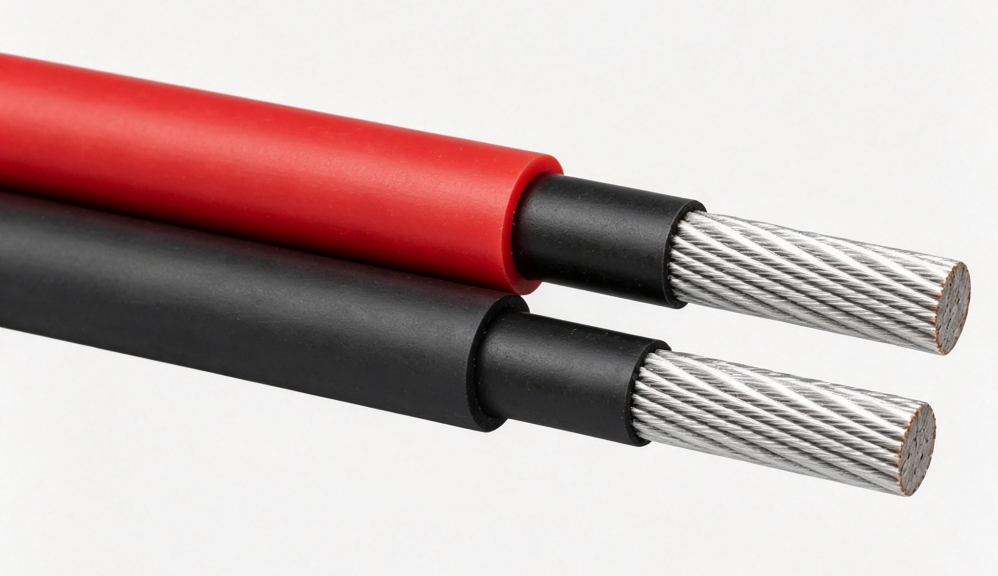
Designed for DC connection between solar modules and combiner boxes in photovolt......
+ VIEW MORE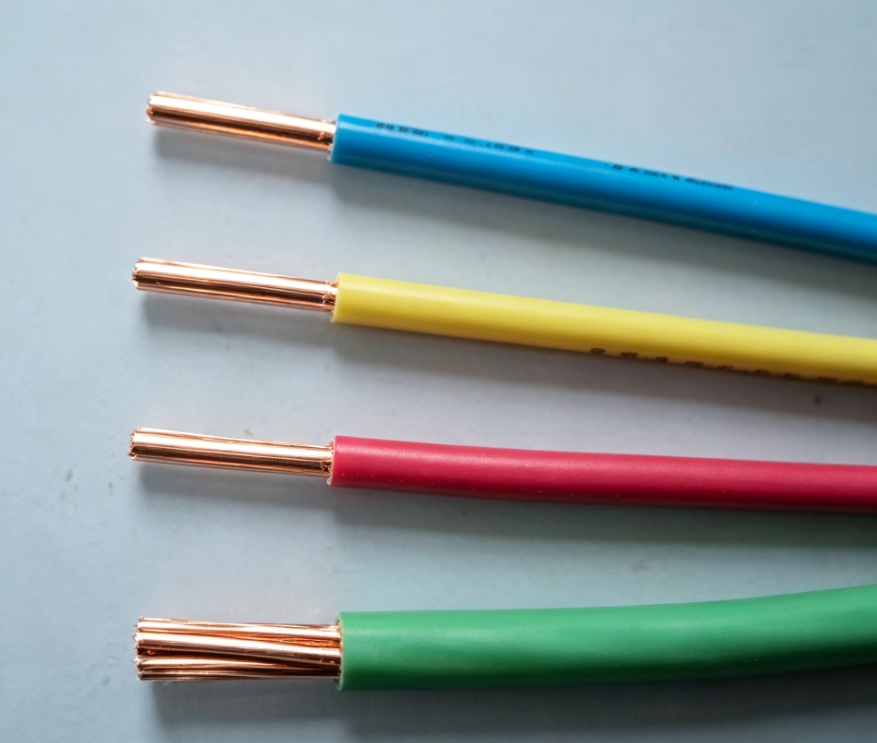
These cables are suitable for power and lighting circuits as well as fixed wirin......
+ VIEW MORE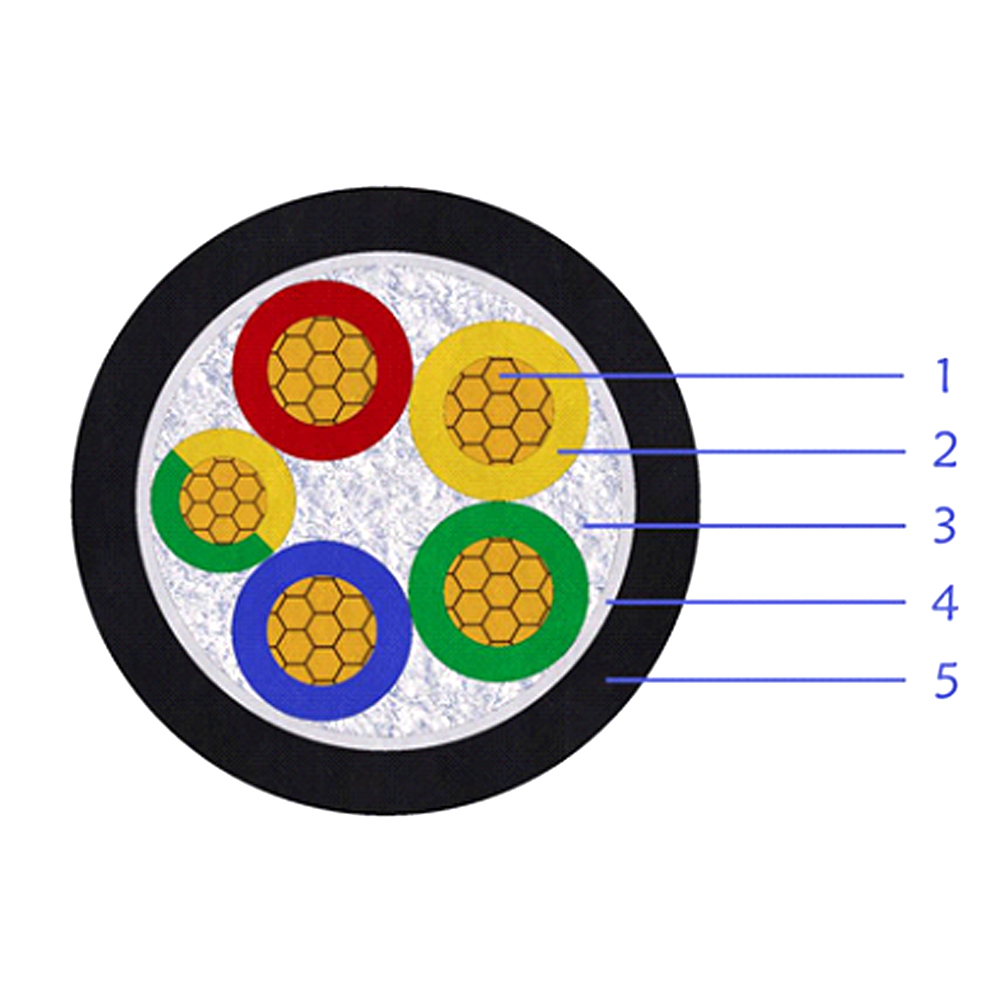
This multi-core XLPE insulated PVC sheathed cable is designed for low-voltage ne......
+ VIEW MORE
The multi-core CU/PVC/PVC cable is engineered for low-voltage distribution where......
+ VIEW MORE
This single-core CU/PVC/PVC cable is designed for low-voltage power transmission......
+ VIEW MORE
This single-core XLPE insulated PVC sheathed cable is ideal for low-voltage powe......
+ VIEW MORE
Ready To Customise
Your Cable Products?