+852-68552081


 Language

 English
 русский
 Español
 عربى

Home / News / Industry News / Qualified Single Core XLPE Insulated Cable Manufacturer for Industrial Power Networks
New

Content
Choosing a medium voltage cable for a factory substation or an inter-building feeder run is rarely decided by the headline on a datasheet. What decides it is how the electric field is handled at the conductor surface, how the screen behaves after years of load cycling, and whether the armour still holds its shape after a long pull through a duct. Those three things are where a qualified manufacturer and a catalogue reseller part ways.
The designation is not decoration. It states 3.6 kV phase-to-earth, 6 kV between phases, and 7.2 kV as system voltage the cable is expected to see. For this product the operating voltage is given as 3.8/6.6 kV, which places it squarely in the range of industrial distribution feeders, motor supply circuits, packaged substations and plant-to-plant tie lines where the supply sits below the 10 kV class but above low voltage. Getting this number right at the specification stage matters more than buyers expect, because a cable sized for the wrong voltage class will pass a factory test and still fail an insulation coordination review later.
Under the outer sheath, this single core cable runs a plain annealed, Class 2 compacted copper conductor, with an extruded semi-conductive layer applied directly over the strands. That conductor screen is the quiet hero of the whole design. Stranded copper leaves small gaps between wires, and any air pocket at that boundary concentrates stress until it eventually initiates a discharge. Extruding semicon material into those interstices removes the void, and the same logic drives the second semi-conductive layer over the XLPE insulation, which smooths the transition from insulation to screen.
The insulation itself is XLPE compound, chosen across medium voltage work for low dielectric loss and a continuous rating of 90 °C, with a short-circuit allowance of 250 °C. Above the insulation screen sits a copper tape metallic screen. In a single core construction the screen does two jobs at once: it holds the radial field inside the insulation, and it gives fault current somewhere to travel. Tape overlap and thickness are the details worth confirming, since a thin or poorly lapped screen is invisible in a photograph and very visible in service.
Armouring here is aluminium wire, laid over a PVC inner sheath and finished with a Type ST2 PVC outer sheath. The choice of aluminium rather than steel wire is not accidental on a single core cable; magnetic armour on a single core conductor invites circulating currents and added loss, so non-magnetic wire is the sounder route for AC service. The inner sheath separates the screen from the armour electrically, and the outer sheath carries the mechanical and environmental duty.
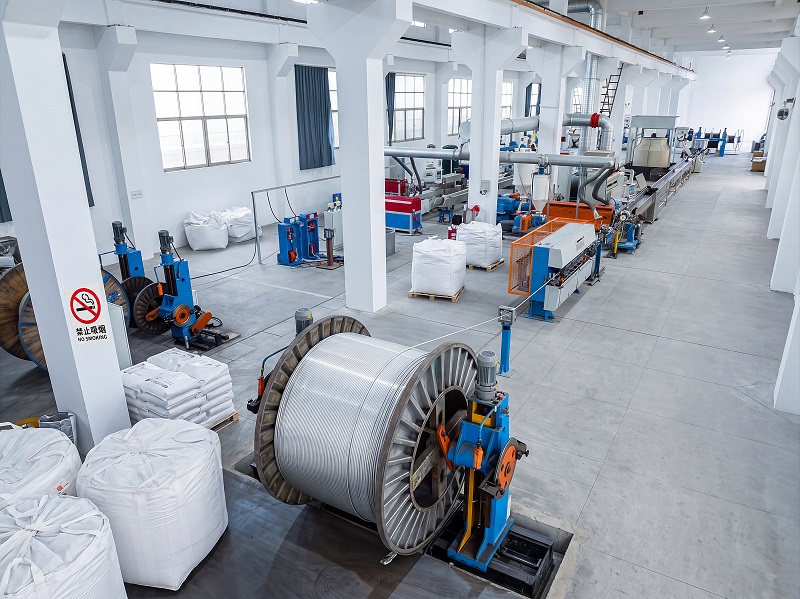
Many procurement teams already know the standard clauses.The useful screening happens in the conversation before the purchase order. Ask how the conductor screen and insulation are applied, and whether the extrusion is done in a controlled, single-pass sequence rather than as separate operations with handling in between. Ask what routine electrical testing each drum receives; for this voltage class a power frequency test at 3.5 U₀ is the expected baseline, and a supplier who can describe the test setup without hesitation usually has one.
Then move to the physical details. Copper tape width and overlap, armour wire diameter consistency, sheath thickness against the drawing, and whether drum lengths are built to the site's pulling plan or cut from a standard stock length. On export orders, packing, drum marking and the documentation package matter as much as the cable, because a container that arrives with mismatched test certificates creates a delay no discount can offset. A manufacturer who answers these questions in specifics, and who can quote alternative armour and sheath options without redirecting you to a different department, is generally the one worth shortlisting.
Wuxi Xinyu Cable Co., Ltd. builds this 3.6/6(7.2) kV single core XLPE insulated cable in Wuxi, Jiangsu, and supplies it into industrial and utility distribution projects at home and abroad. The plant works from drawings rather than fixed catalogue lengths, so conductor size, armour type, sheath compound and drum length can be aligned to the installation instead of compromised around it. Engineering support sits close to production, which is why questions about screen construction or armour selection tend to come back as answers about the actual build rather than a brochure page.
Cables of this class are commonly specified against IEC 60502-2 type construction requirements, and the factory can discuss the test regime and documentation package that go with an order of this voltage level.
Why choose aluminium wire armour for this single core XLPE cable instead of steel wire?
Steel wire armour induces circulating current and extra heat loss under AC operation, while aluminium wire is non-magnetic and avoids that path of loss and overheating. The aluminium wire armour on this 3.6/6(7.2) kV single core cable is what keeps thermal behaviour predictable over a long service life in industrial power networks. Where a project drawing calls for steel wire armour, the construction can be reviewed with the engineering team rather than forced onto a standard build.
Can conductor size, sheath material and drum length be customised?
Yes. Production runs from the project cable schedule, so conductor cross-section, sheath compound and delivery drum length can follow the drawing instead of a stock list. That flexibility matters on retrofit work, where trench dimensions and pulling plans rarely match a catalogue length, and on multi-drop export shipments where drums are packed to suit the receiving site.
What test documentation comes with an export order?
Each drum is covered by routine electrical test records, with the power frequency test at 3.5 U₀ forming the baseline for this voltage class, alongside the dimensional and construction checks that correspond to the approved drawing. Certificates travel with the drum marking so that the file received at site can be matched to the cable in the container. Buyers who need an additional witness test or a pre-shipment inspection can arrange it through the sales team before production is released.
If your project needs a single core medium voltage cable that will sit in a substation trench or a plant feeder for the next twenty-five years, the fastest way to a usable quotation is to send the voltage class, conductor size, armour and sheath preference, required drum length and destination port.
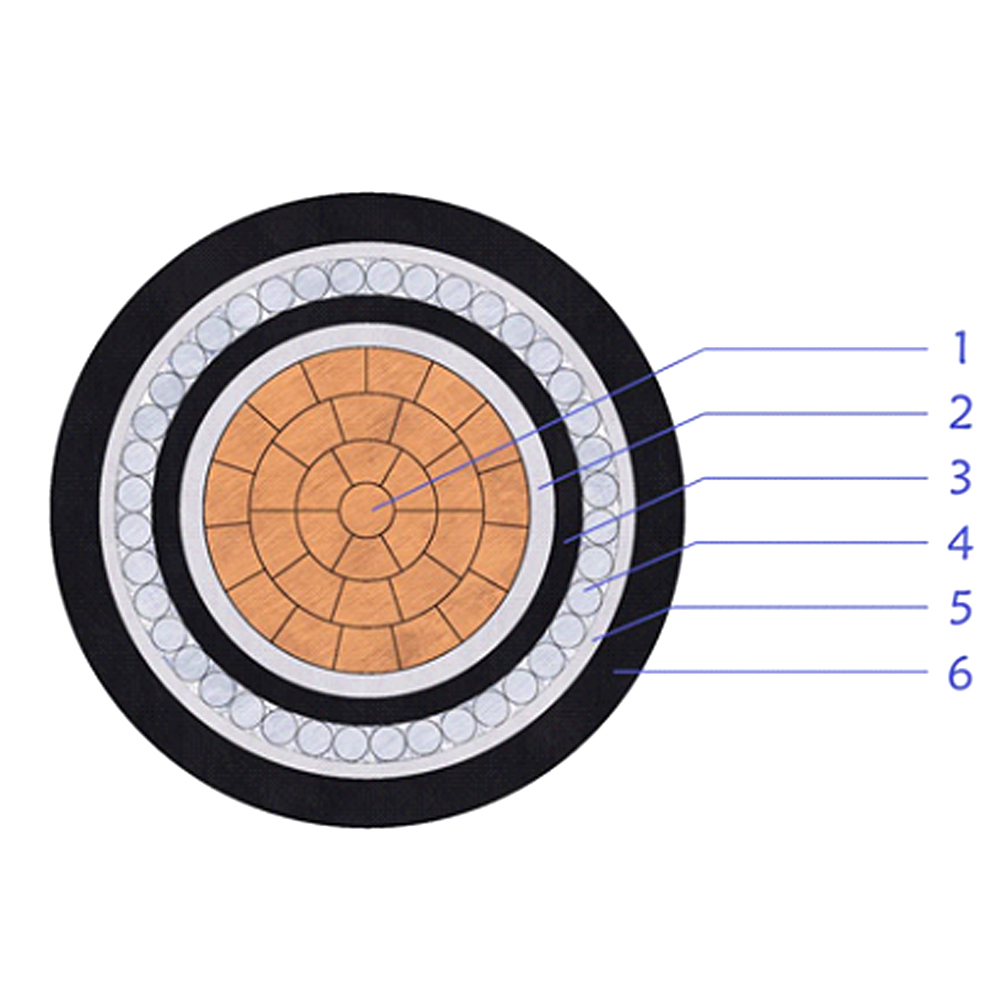
This cable is used as a main power feeder in low-voltage distribution networks. ......
+ VIEW MORE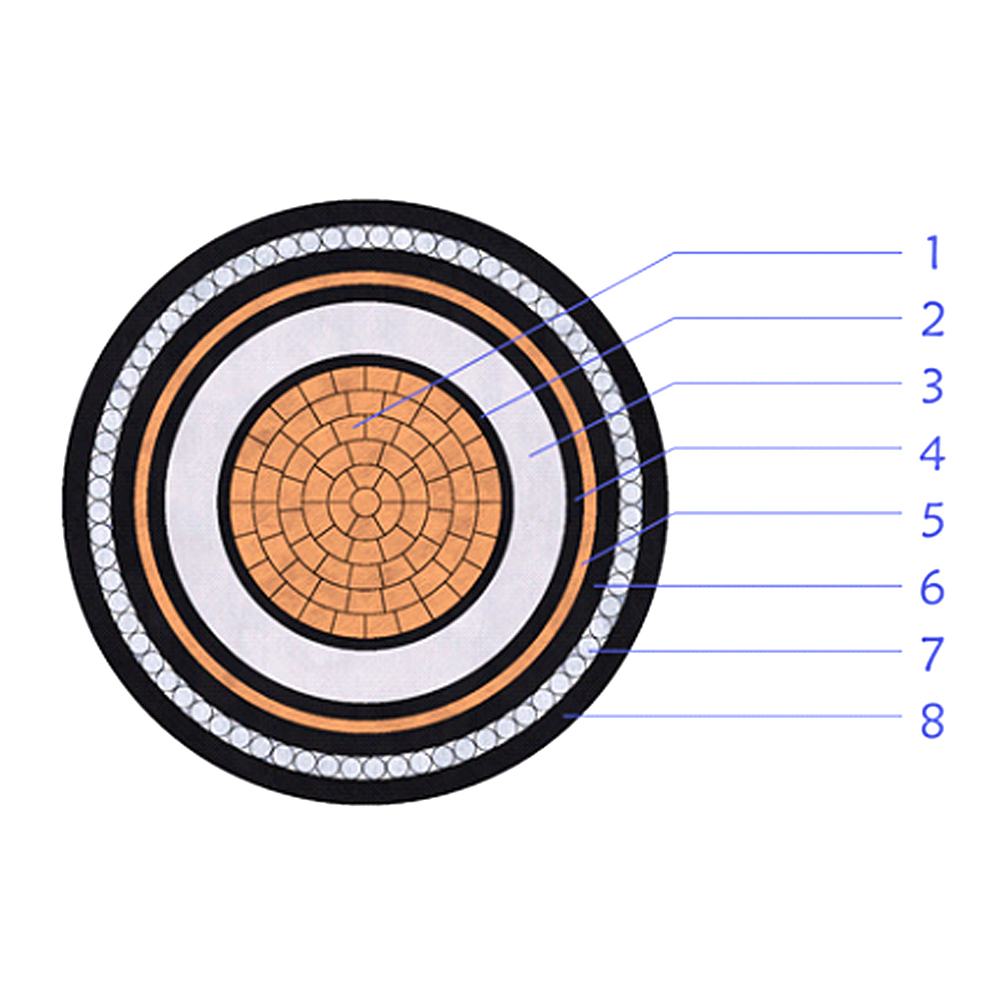
This 3.6/6(7.2)kV medium voltage power cable is designed with a copper conductor......
+ VIEW MORE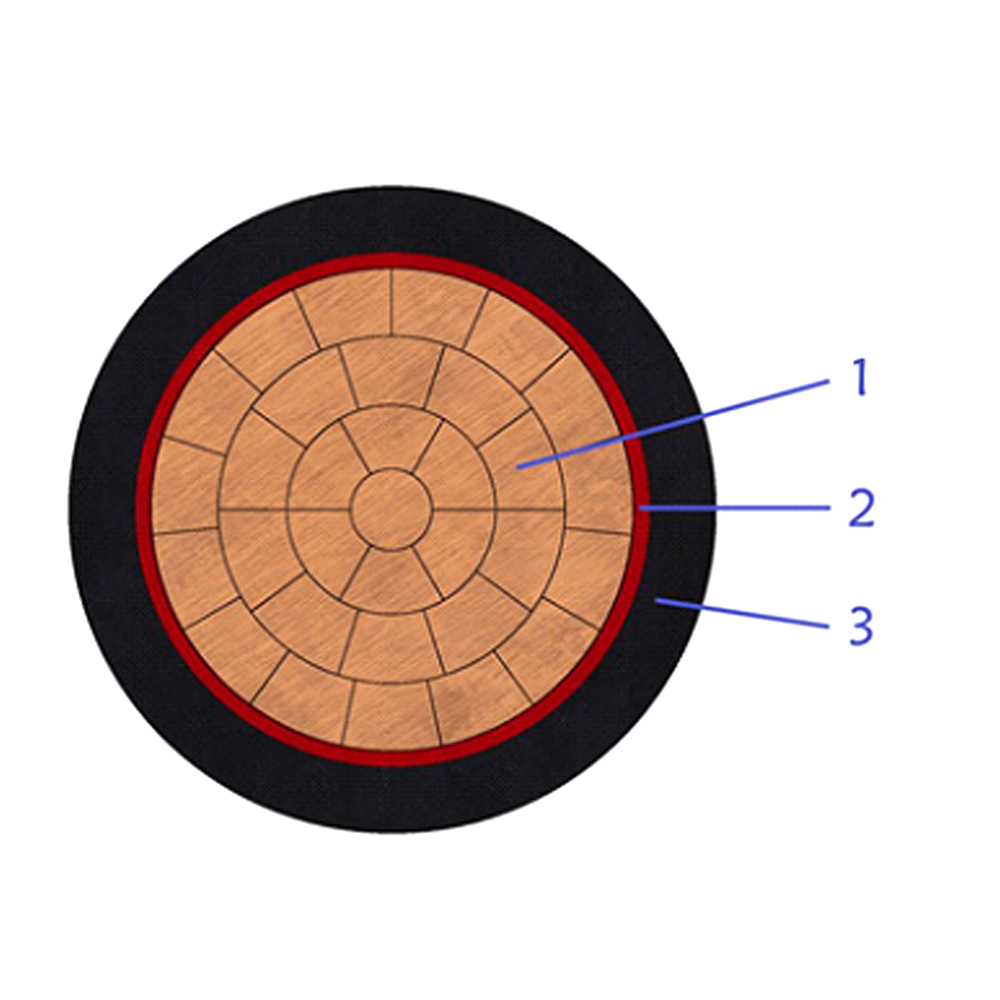
This single-core CU/PVC/PVC cable is designed for low-voltage power transmission......
+ VIEW MORE
This multi-core XLPE insulated unarmored power cable is designed for medium volt......
+ VIEW MORE
CU/XLPE/CTS/PVC/SWA/PVCThis multi-core medium-voltage power cable features XLPE ......
+ VIEW MORE
CU/XLPE/CTS/PVC/DSTA/PVCThis multi-core medium-voltage power cable is built with......
+ VIEW MORE
Ready To Customise
Your Cable Products?