+852-68552081


 Language

 English
 русский
 Español
 عربى

Home / News / Industry News / How to Select Reliable Shielded Control Cable Manufacturers for Industrial Signal Projects
New

Content
Shielded control cables transmit sensitive analog and digital signals for PLCs, sensors, frequency converters, and instrument systems. Many procurement engineers source shielded control cable manufacturers based solely on price. This practice may trigger signal drift, electromagnetic interference, and intermittent faults, resulting in costly production-line shutdowns after installation. This article helps buyers distinguish genuine manufacturers from resellers and select proper shielding structures for site operating conditions. It covers core selection criteria, testing specifications, comparisons of shielding options, and installation guidance.
Competent shielded control cable manufacturers are not merely factories with sheath extrusion capabilities. They can tailor cable structures according to electromagnetic environments, rated voltage, bending cycles, temperature ranges, and local certification requirements. The following section breaks down key evaluation dimensions, compares mainstream shielding solutions, and provides a practical RFQ checklist.
The core function of shielded control cables lies in blocking electromagnetic noise, which sets them apart from ordinary unshielded control cables. A standard structure consists of stranded copper conductors, color-coded insulation layers, shielding layers, and outer sheaths. Common rated voltages for control circuits are 300/500 V and 450/750 V. European-targeted projects generally follow EN 50525 and VDE standards; North-American projects adopt UL 2464; general foreign-trade orders are often produced per IEC 60227.
Low-cost suppliers may cut corners by lowering braid coverage or using thin aluminium foil prone to damage. Conductor quality presents another risk. Conductors made from recycled copper or with undersized cross-sections bring higher resistance and signal attenuation. Before bulk procurement, request conductor resistance and insulation resistance test reports for each production batch.
The table below compares three mainstream shielding structures offered by shielded control cable manufacturers:
|
Shielding Type |
Structure |
Electromagnetic Interference Suppression Performance |
Bending Resistance Life |
Typical Application Scenarios |
|
Aluminium foil plus drain wire |
Wrapped aluminium-plastic composite foil with full coverage |
Works well against high-frequency noise |
Limited performance; foil tends to crack under repeated bending |
Fixed cabinet wiring, general instrument circuits |
|
Tinned copper braided shield |
Tinned copper mesh braiding with 75%-90% coverage |
Effective for medium- and low-frequency magnetic-field interference |
Good bending resistance |
Energy-chain systems, robotic equipment, moving machinery |
|
Combined aluminium-foil-plus-braid shield |
Inner aluminium foil layer plus outer copper braid |
Broad-band interference suppression with balanced overall performance |
Moderate performance; larger cable outer diameter |
Heavy-duty industrial sites near frequency converters and welding equipment |
During procurement, confirm whether suppliers can complete a full set of in-house tests for shielded control cables. Many trading companies outsource manufacturing and cannot run shielding-effectiveness tests. Genuine manufacturers maintain closed-loop quality control, overseeing processes from incoming copper-raw-material inspection through finished-cable coiling and shipment.
Basic management certifications include ISO 9001 and ISO 14001. For export orders, check CE, RoHS, UL, or other local market-access certifications. Routine test items cover conductor resistance, insulation thickness, voltage withstand, insulation resistance, and sheath tensile properties. For shielded variants, transfer impedance, braid coverage, and EMC compatibility tests serve as key type tests for filtering out unqualified suppliers.
Lead-time performance and customisation capacity also carry weight. Automated production lines call for consistent and stable supply. Ask manufacturers about monthly output, available core-count options, custom flame-retardant or low-smoke-zero-halogen versions, coiled-packaging solutions, and sample support. For large-scale industrial projects, request samples from manufacturers for third-party testing before mass production.
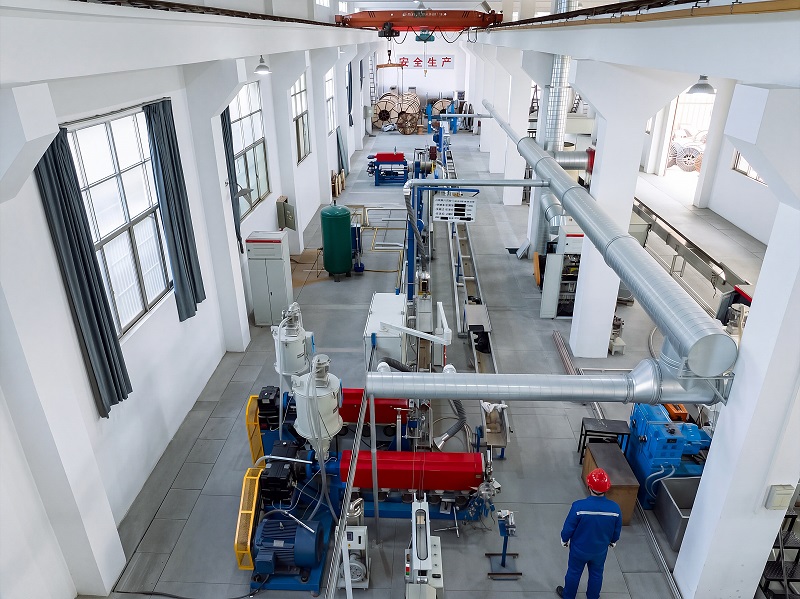
Select sheath materials to match service environments. Standard PVC sheaths suit dry indoor cabinet-mounted wiring. For tunnels, power plants, public facilities and other sites with strict fire-safety rules, choose LSZH (low-smoke-zero-halogen) sheaths. Outdoor installations and chemical workshops require oil-resistant and UV-stable sheaths.
Shield-earthing arrangements directly influence interference-suppression outcomes. Single-end earthing applies to low-frequency analogue signals to avoid ground-loop currents. Double-end earthing works for high-frequency pulse signals. Avoid damaging shielding layers during cable pulling and installation. Supplier installation manuals need to specify bending radius, pulling tension, and operating-temperature range.
Shielding performance listed on datasheets is measured under standard laboratory conditions. Real-world interference-suppression results depend on cable routing, separation distance from power cables, and earthing schemes. Do not rely solely on datasheet parameters; request complete EMC test reports.
Inspect every cable reel upon delivery: verify cable printing, intact end-seals, sheath surface condition, and consistency between batch certificates and physical goods. Damaged end-seals allow water ingress and create hidden faults that may surface months after commissioning.
Include the following clauses in RFQ documents to reduce product-substitution risks and commercial disputes:
Reliable shielded control-cable manufacturers deliver more than physical products. They provide technical support covering earthing-scheme design, matching-component selection, and on-site troubleshooting. Review standards, laboratory capacity, shielding-design logic, and environmental compatibility to steer clear of inferior alternatives and support stable operation of industrial-control systems.
Q: Which shielding suits energy-chain and robotic moving cables?
A: Tinned copper braided shielding sees wide use for dynamic applications with repeated bending. Users seeking stronger interference suppression may select combined aluminium-foil-and-braid shielding.
Q: What differences exist between single-end and double-end earthing for shielded control cables?
A: Single-end earthing prevents ground-loop formation for low-frequency analogue signals. Double-end earthing suppresses high-frequency interference yet may introduce ground-loop risks in certain site conditions.
Q: Why do infrastructure-focused public projects specify LSZH sheaths?
A: Low-smoke-zero-halogen sheaths produce limited smoke and release no halogen substances during combustion, lowering safety risks for personnel and equipment in enclosed spaces.
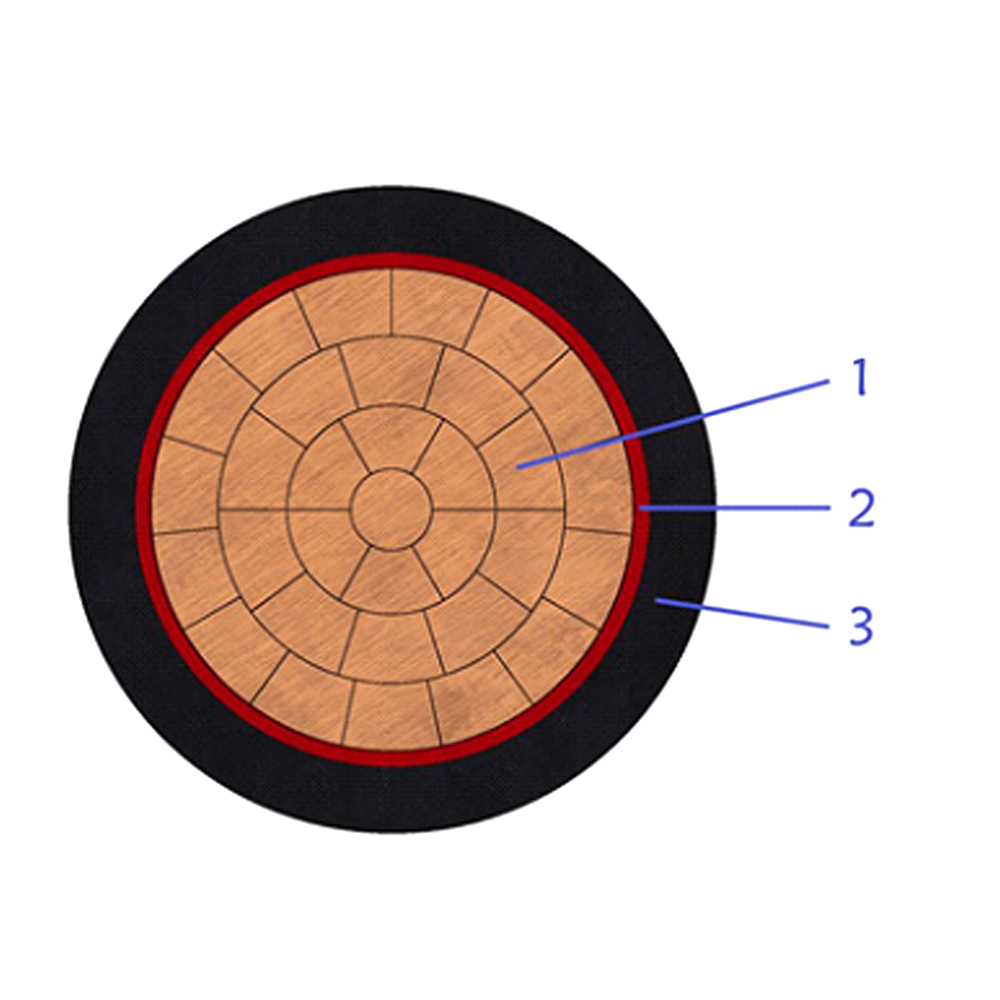
This single-core CU/PVC/PVC cable is designed for low-voltage power transmission......
+ VIEW MORE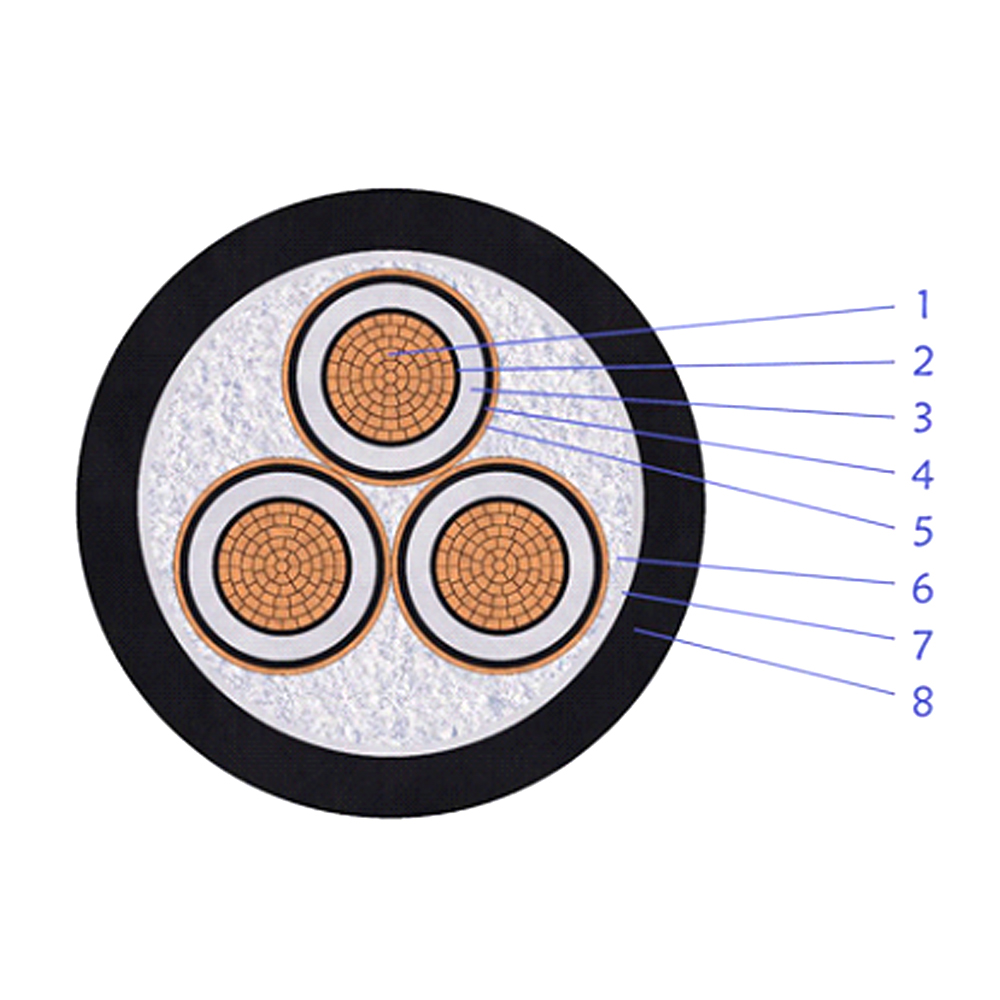
This multi-core XLPE insulated unarmored power cable is designed for medium volt......
+ VIEW MORE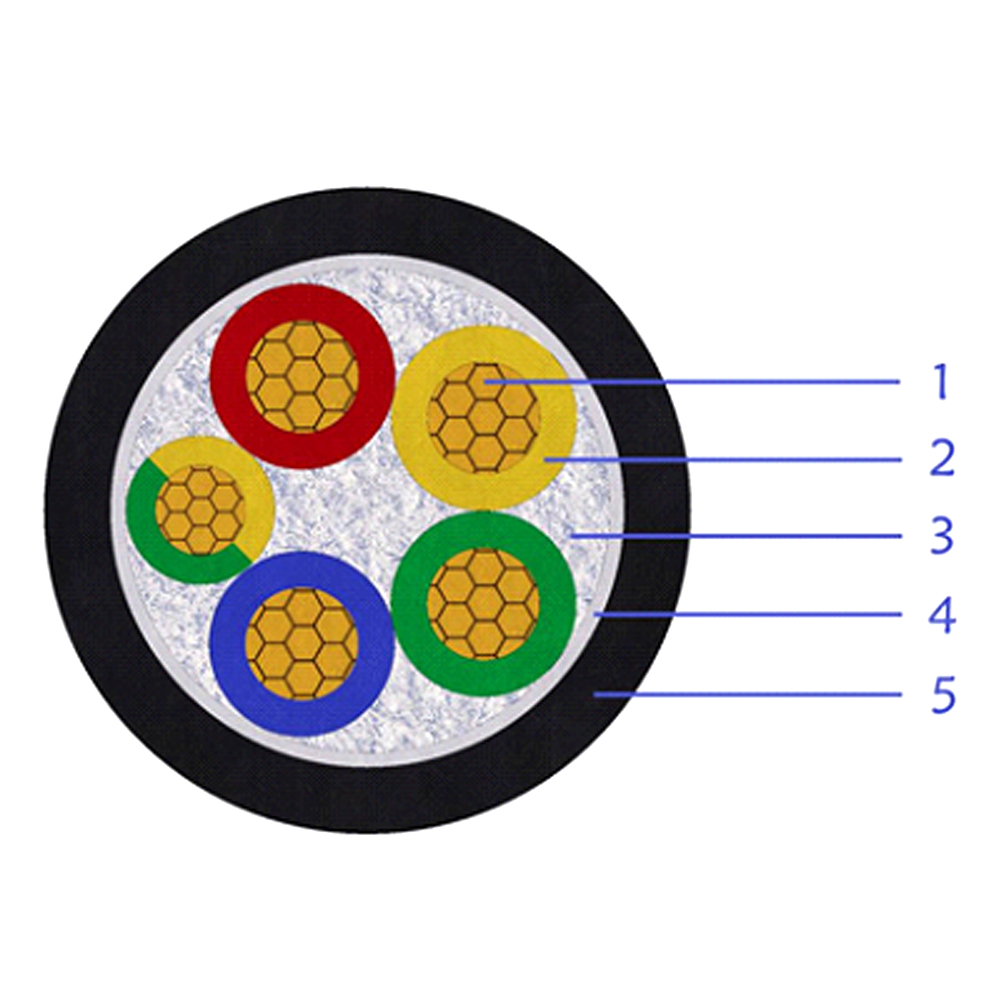
The multi-core CU/PVC/PVC cable is engineered for low-voltage distribution where......
+ VIEW MORE
This 3.6/6(7.2)kV medium voltage unarmored power cable is designed for fixed ins......
+ VIEW MORE
This multi-core XLPE insulated unarmored power cable is designed for medium volt......
+ VIEW MORE
This 6/10(12)kV XLPE insulated unarmored power cable is intended for medium volt......
+ VIEW MORE
Ready To Customise
Your Cable Products?