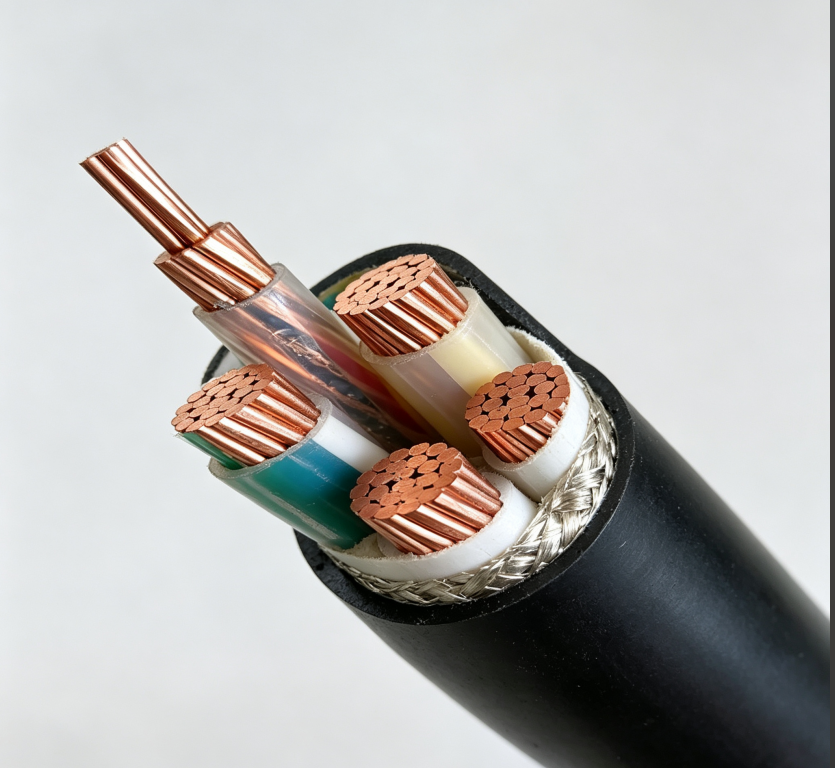
Suitable for transmission of control, interlock and measuring signals in seconda......
+ VIEW MOREIndustry News
Content
Plastic-insulated control cables serve as the foundation for industrial automation wiring. They transmit low-current control commands and feedback signals among PLC control cabinets, contactors, limit switches, solenoid valves, sensors and field actuators. Many engineers treat these cables simply as multi-core wires and compare only per-meter prices. Nevertheless, insulation materials, core counts, shielding layers, armouring and temperature-resistance grades govern stable circuit operation. Poor selection may signal interference, measurement drift, premature ageing and equipment fault reports. This article describes plastic-insulated control cables, outlines their differences from power cables, introduces proper cross-section selection practices, and lists parameters to be clearly specified in bill-of-material entries and purchase orders.
Plastic-insulated control cables feature extruded thermoplastic insulation over individual copper conductors. Multiple insulated cores are cabled together and wrapped within a shared outer sheath. They are designed specifically for control and signal circuits, rather than high-power motor power supply. Common rated voltage values stand at 300/500 V or 0.6/1 kV, with core counts ranging from 2 up to 61 or more. Conductor cross-sections tend to be relatively small; frequently-used sizes include 0.5 mm², 0.75 mm², 1.0 mm², 1.5 mm² and 2.5 mm².
Insulation polymer constitutes a key selection criterion. Polyvinyl chloride (PVC), a baseline material, permits long-term operating temperatures near 70 °C. It carries low cost and enjoys broad stock availability, and fits dry indoor control-cabinet and cable-tray applications. Cross-linked polyethylene (XLPE) insulation sustains continuous operation near 90 °C. It delivers improved thermal-ageing resistance and chemical tolerance, making it suitable for locations with elevated ambient temperatures or routes running alongside power cables. Low-smoke zero-halogen (LSZH) formulations apply to enclosed public spaces, tunnels, vessels and fire compartments, where they limit emission of toxic fumes and acidic gases. Polyethylene (PE) insulation exhibits low dielectric loss and suits high-impedance instrument-signal circuits, though its softer construction yields lower mechanical strength compared with PVC.
Control cables are frequently confused with power cables. Power cables are sized according to large load currents, and normally have few cores with large individual cross-sections. Plastic-insulated control cables adopt numerous fine-gauge cores to maintain consistent circuit resistance and support noise immunity for weak signals. Multi-core power cables cannot substitute for control cables, and the reverse also holds true.
These specifications represent frequent sources of error within automation projects. Unshielded plastic-insulated control cables work for cabinet-internal wiring in low-interference dry environments, carrying stable 24 V DC or 120 V AC discrete signals. Shielded variants become necessary for 4-20 mA analogue sensor signals, encoder feedback signals, or layouts where low-voltage logic conductors run parallel to variable-frequency drive cables. Two mainstream constructions prevail: aluminium-foil shielding with drain wires offers cost-effective general-purpose noise mitigation; copper-braid shielding delivers better suppression against low-frequency magnetic fields for sites housing variable-frequency drive equipment.
Armouring and shielding form independent structural features. Steel-tape-armoured (STA) plastic-insulated control cables safeguard outer sheaths against compressive stress, rodent activity and mechanical damage for direct burial, concrete encasement or unprotected duct routing. Armouring does not take the place of signal shielding. A single cable may incorporate both shielding and armouring, or only one of these features. Selection should respond to risks of mechanical harm, rather than electrical-signal characteristics alone.
Control-cable circuits carry modest currents, yet designers often overlook current-carrying-capacity derating. This oversight may produce overheating where cables run densely within cable trays. Current-carrying-capacity figures published in product samples derive from reference test conditions: free air circulation, nominal ambient temperature and absence of tight bundling. Heat dissipation declines when many control cables are grouped in trays or conduits, so relevant derating factors should apply. PVC insulation experiences accelerated ageing when sustained above 70 °C ambient temperature.
Voltage drop merits attention for long-distance sensor wiring, especially for 4-20 mA signal loops. Even minor added circuit resistance can push measurement deviation beyond instrument tolerance bands. For extended field runs, designers may specify larger conductor cross-sections or place signal converters closer to sensors. Unlike power-supply power circuits, control-loop performance seldom depends on thermal current limits; circuit resistance and signal accuracy exert greater influence.
These cables serve as standard wiring for PLC input-output connections, conveyor control cabinets, packaging-machinery assemblies, HVAC automatic-control systems, water-treatment valve banks and on-site junction boxes at manufacturing facilities. PVC-insulated types fit dry indoor locations for standard industrial tray and conduit installation. XLPE-insulated cables suit equipment housings with higher temperatures and areas exposed to chemical agents. Low-smoke zero-halogen cables find mandated use within rail-transit infrastructure, offshore platforms and fire-rated public-building passageways.
Standard plastic-insulated control cables do not suit continuously-flexing drag-chain applications unless constructed with fine-stranded flexible conductors. Solid-hard-conductor cables develop fatigue cracking under repeated bending. They also cannot replace high-speed twisted-pair data cables. Ethernet, RS-485 and field-bus communications require dedicated twisted-pair instrument cables instead of general-purpose multi-core control cables.
Installation-pull tension and bend radii receive insufficient attention in many projects. Excessive pulling force can scratch, stretch or delaminate plastic insulation. Follow bend-radius values supplied by manufacturers: unarmoured cables generally require a bend radius no smaller than six times the overall cable diameter, while armoured cables often call for twelve times the diameter or higher. Maintain physical separation or install earthed metallic dividers between control cables and power or variable-frequency-drive cables to reduce crosstalk. For analogue-signal circuits, connect cable-shield drain wires to earth at one end only. Consult instrument-manufacturer documentation before implementing double-ended earthing schemes.
Cable glands and terminal lugs should match the voltage class and temperature rating of the connected cable. Avoid pairing 70 °C-rated PVC cables with terminals rated for 60 °C service. Apply clear identification markers to every conductor core. Spare cores should remain available inside junction boxes to support future modification and troubleshooting tasks.
Q: Are plastic-insulated control cables identical to instrument cables?
A: Not entirely. Control cables handle discrete control signals and low-power relay circuits. Instrument cables employ twisted-pair geometries optimised for faint analogue signals.
Q: Can PVC control cables run outdoors?
A: Only variants whose outer sheaths carry resistance to ultraviolet degradation allow outdoor installation. Conventional PVC undergoes rapid degradation under ultraviolet exposure.
Q: Must shielded cables carry 24 V DC signals?
A: Shielding proves unnecessary for short runs situated far from variable-frequency drive equipment. Deploy shielded cables when signal interference causes irregular unintended equipment triggering.
Plastic-insulated control cables cover broad application territory. Labelling a cable merely as “plastic-insulated” provides insufficient specification. Insulation-polymer type, shielding construction, armouring, core count and temperature-resistance grade collectively define compatibility with operating conditions. PVC works for cost-focused indoor layouts. XLPE applies to high-temperature or chemically-exposed sites. Low-smoke zero-halogen variants fit locations with fire-safety priorities. Specify shielding for layouts with variable-frequency drives or analogue sensors. Avoid treating these cables as generic commodity wires. Document structural requirements and request test reports as appropriate, and apply current-carrying-capacity derating for grouped-cable installation.
Contact our engineering team for datasheets and technical support if you require physical samples, non-standard core-count configurations or formal quotations.
Suitable for transmission of control, interlock and measuring signals in seconda......
+ VIEW MORE
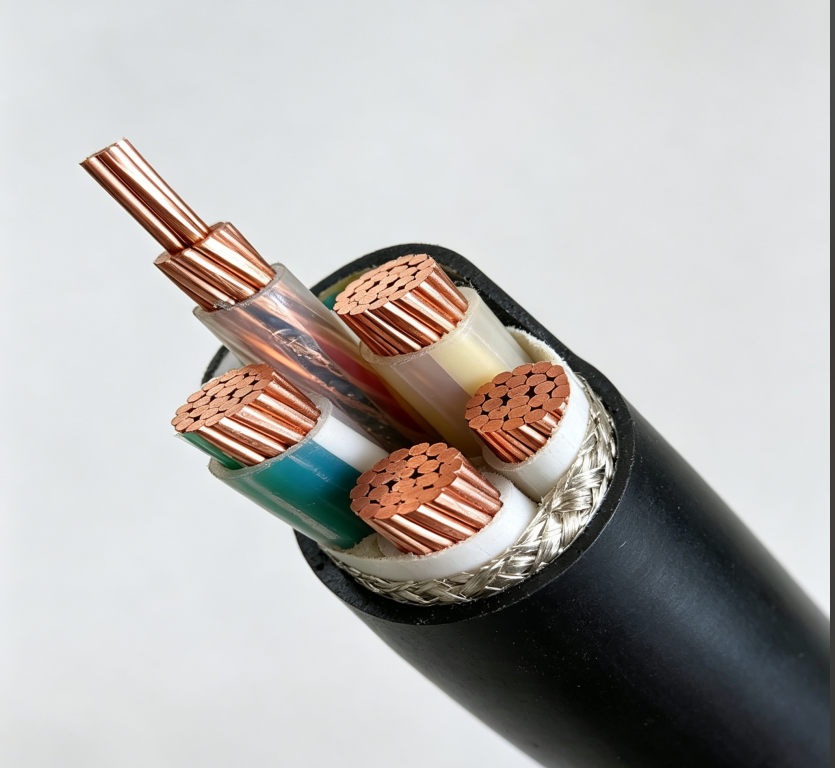
Suitable for transmission of control, interlock and measurement signals in secon......
+ VIEW MORE
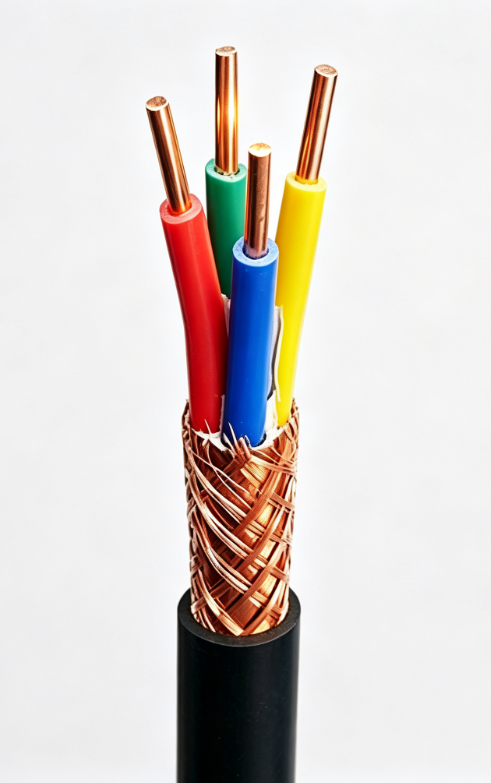
Suitable for transmission of control signals, interlock signals and measuring si......
+ VIEW MORE
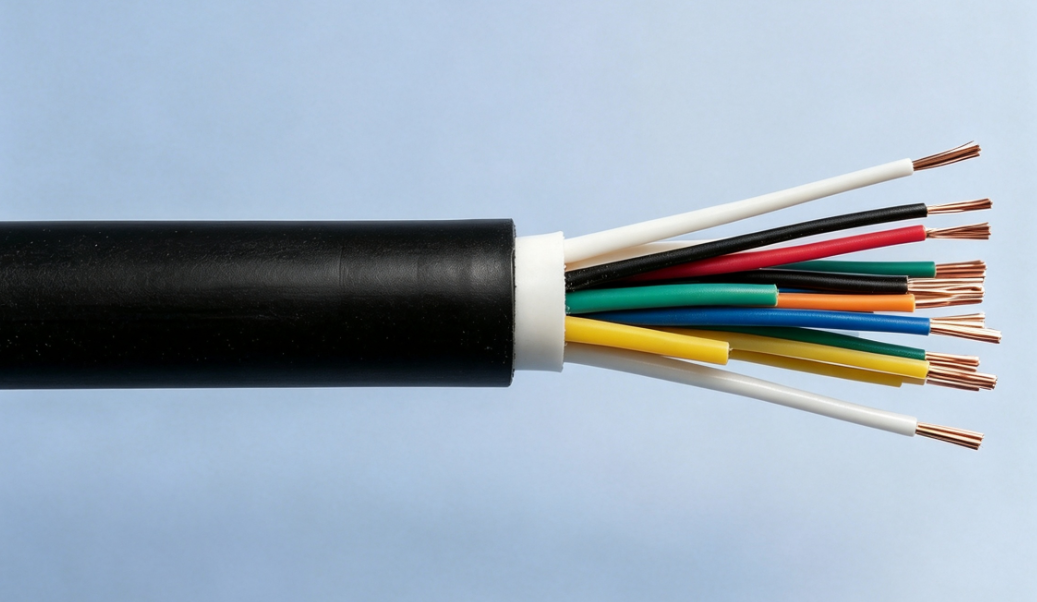
Suitable for transmission of analogue and digital control signals between comput......
+ VIEW MORE
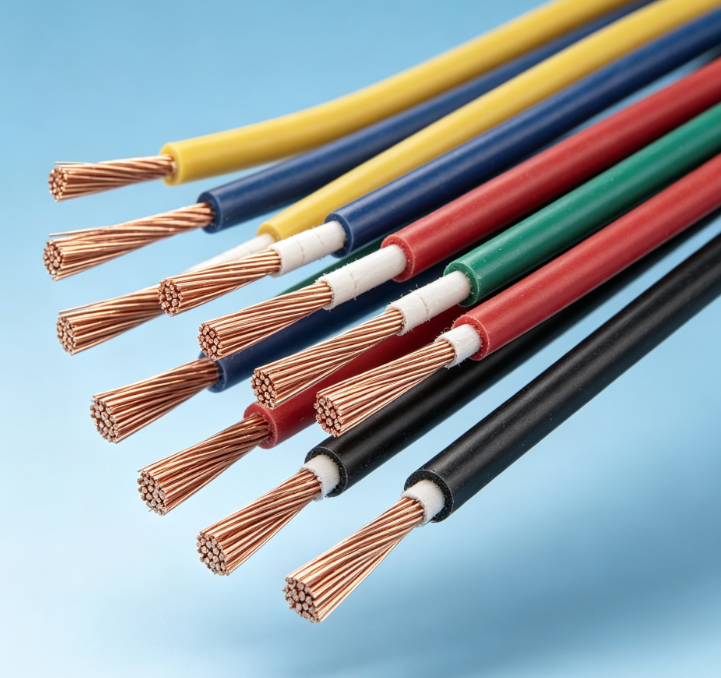
Suitable for fixed wiring, power and lighting circuits, internal and external co......
+ VIEW MORE
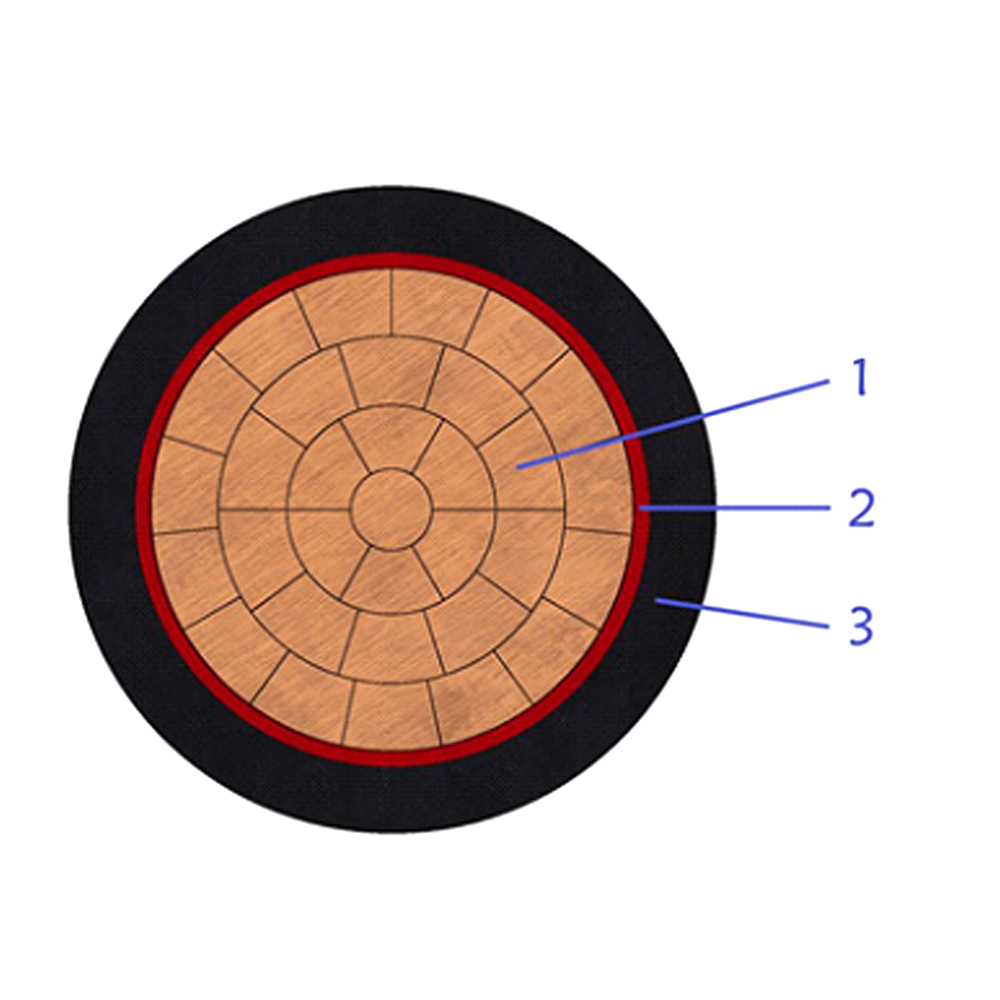
This single-core CU/PVC/PVC cable is designed for low-voltage power transmission......
+ VIEW MORE
Ready To Customise
Your Cable Products?