Home / News / Industry News / How Armoured Power Cables Improve Safety and Reliability in Harsh Environments
New

How Armoured Power Cables Improve Safety and Reliability in Harsh Environments


Armoured power cables are widely used in industrial plants, utility distribution networks, infrastructure projects, and underground electrical installations where additional mechanical protection is required.

Compared with unarmoured cables, armoured cables incorporate a metallic protective layer designed to reduce the risk of mechanical damage during installation and operation. However, the appropriate armour construction depends on cable configuration, operating conditions, installation method, and applicable technical standards.

This guide explains the differences between steel wire armour (SWA), steel tape armour (STA), and aluminium wire armour (AWA), and outlines the key considerations for selecting low- and medium-voltage armoured power cables.

1. What Is an Armoured Power Cable?

An armoured power cable contains a protective metallic layer positioned outside the insulated cores and associated inner coverings, depending on the cable design.

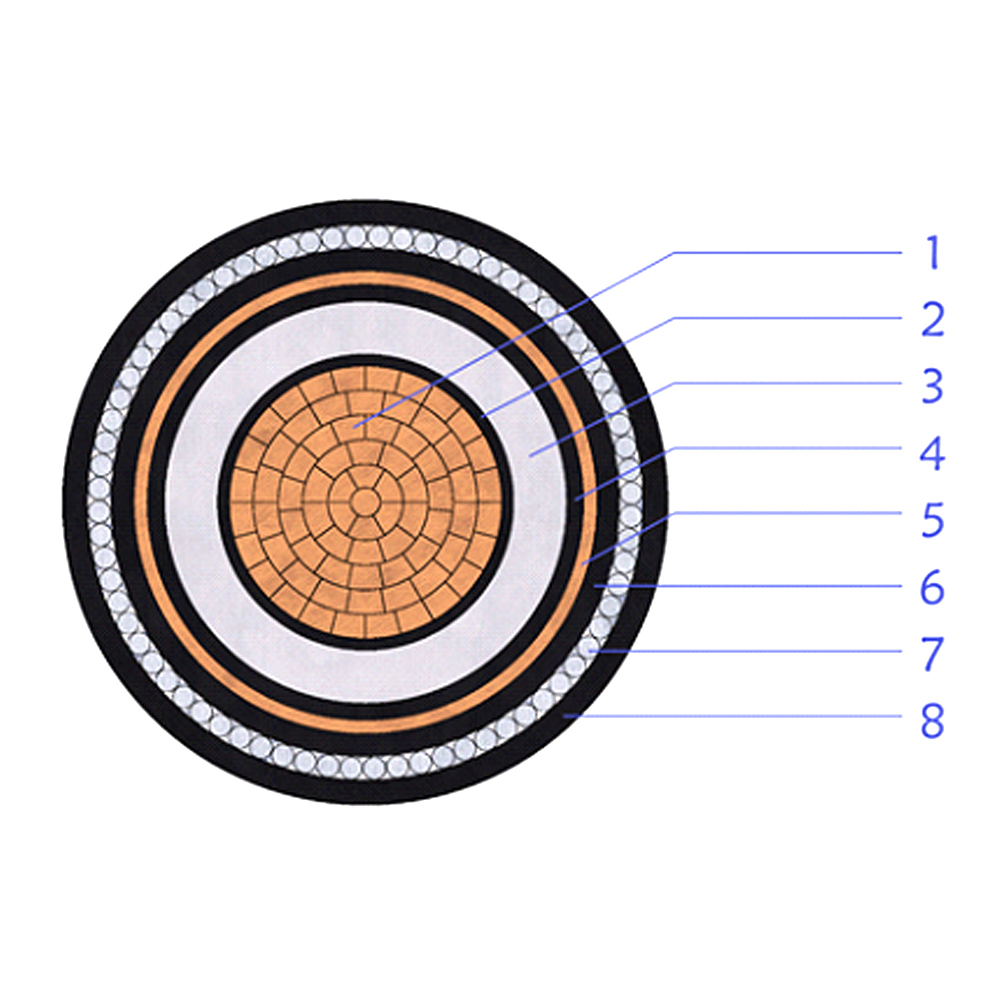
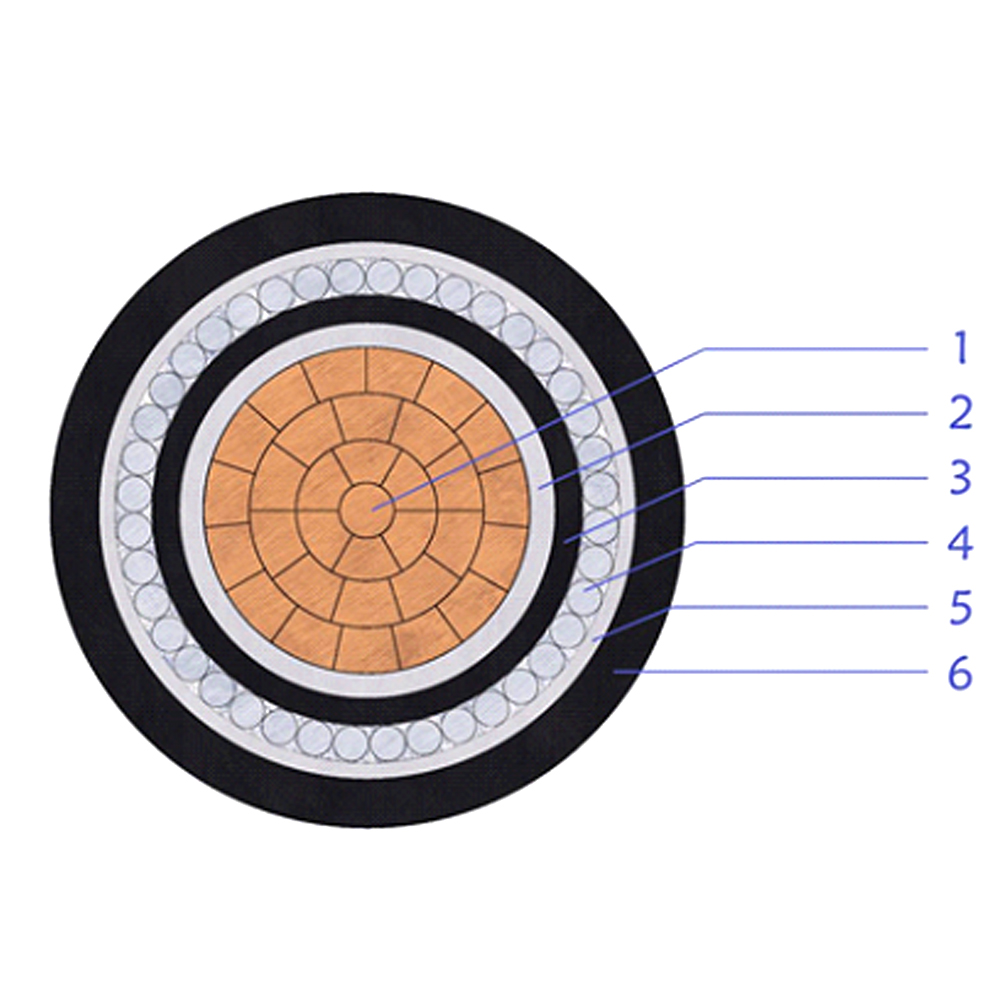
A typical low-voltage XLPE-insulated armoured cable may include:

  1. Copper or aluminium conductor.
  2. XLPE insulation.
  3. Fillers and inner covering, where applicable.
  4. Metallic armour.
  5. Outer protective sheath.

Medium-voltage armoured cables typically incorporate additional components, including conductor screens, insulation screens, and metallic screening systems.

The exact construction depends on the voltage rating, number of cores, applicable standard, and customer specification.

The primary function of armour is to provide additional mechanical protection against installation damage and external mechanical stresses.

Armour does not automatically make a cable waterproof, fire-resistant, explosion-proof, or suitable for every hazardous environment.

These characteristics must be evaluated separately.

2. Common Types of Cable Armour

2.1 Steel Wire Armour (SWA)

Steel wire armour consists of steel wires applied around the cable assembly.

SWA is commonly used in multicore power cables where additional mechanical protection is required.

Typical applications include:

  • Underground power distribution.
  • Industrial facilities.
  • Infrastructure projects.
  • Outdoor electrical installations.
  • Fixed installations exposed to mechanical stress.

SWA can provide mechanical protection and may be suitable for installations involving specified tensile forces, subject to the cable design and manufacturer's installation limits.

However, the presence of steel wire armour does not mean that the cable is suitable for unrestricted pulling loads or continuous flexing.

The permissible pulling tension, bending radius, and installation method must be confirmed for the selected cable.

2.2 Steel Tape Armour (STA)

Steel tape armour consists of metallic tapes applied around the cable assembly.

STA is commonly used in multicore cables intended for fixed installations where additional protection against external mechanical damage is required.

Typical applications include:

  • Buried cable installations.
  • Industrial power distribution.
  • Fixed infrastructure installations.
  • Cable routes requiring additional mechanical protection.

The suitability of STA depends on tape construction, cable design, installation conditions, and the type of mechanical stress expected.

STA and SWA should not be treated as universally interchangeable.

For example, their performance under tensile loading and localized mechanical stress may differ.

The appropriate construction should be selected according to the project specification and manufacturer's technical data.

2.3 Aluminium Wire Armour (AWA)

Aluminium wire armour is a non-magnetic armour construction commonly used for single-core AC power cables.

In single-core AC cables, alternating current produces a time-varying magnetic field around the conductor.

Ferromagnetic steel armour can introduce additional magnetic losses and heating, particularly when it surrounds an individual single-core AC cable.

Non-magnetic armour, such as AWA, is therefore commonly selected for single-core AC applications.

Typical applications include:

  • Single-core low-voltage AC power cables.
  • Single-core medium-voltage AC power cables.
  • Industrial power distribution.
  • Utility distribution networks.
  • Renewable energy projects.

The final armour selection should account for cable arrangement, bonding configuration, operating current, mechanical requirements, and applicable standards.

3. SWA vs STA vs AWA: Key Differences

Armour Type Material Common Cable Configuration Main Selection Consideration
SWA Steel wires Multicore power cables Mechanical protection for suitable fixed installations
STA Steel tapes Multicore power cables Additional protection against specified external mechanical stresses
AWA Aluminium wires Single-core AC power cables Non-magnetic armour to help limit additional magnetic losses

This table describes common applications rather than universal restrictions.

Armour selection must be confirmed against the actual cable construction, installation conditions, and project requirements.

4. Why Armour Selection Matters for Single-Core AC Cables

Single-core and multicore AC cables have different magnetic characteristics.

In a multicore three-phase cable, the magnetic fields associated with the phase conductors interact within the same cable assembly.

In an individual single-core AC cable, the magnetic field surrounds the individual conductor and may interact with nearby metallic components.

Using ferromagnetic armour around an individual single-core AC cable can introduce additional losses and temperature rise.

For this reason, non-magnetic armour such as AWA is commonly used for single-core AC power cables.

The design should also consider:

  • Cable formation and spacing.
  • Metallic screen and sheath bonding.
  • Armour bonding and earthing.
  • Operating current.
  • Installation environment.
  • Short-circuit conditions.

For medium-voltage systems, metallic screen and sheath losses may also affect the permissible current rating.

Where necessary, cable current rating should be evaluated using an applicable calculation method such as IEC 60287.

5. Does Armoured Cable Provide Waterproof Protection?

Armour and water protection serve different functions.

Metallic armour primarily provides mechanical protection. It does not, by itself, prevent water from entering the cable.

Water resistance depends on the overall cable construction, including:

  • Outer sheath material and integrity.
  • Longitudinal water-blocking components, where specified.
  • Radial moisture barriers, where specified.
  • Cable joints and terminations.
  • Installation conditions.

For underground or moisture-exposed installations, the project specification should clearly identify the required water protection performance.

An armoured cable should not automatically be described as waterproof unless the relevant cable construction and performance requirements support that claim.

6. Does Armoured Cable Provide Fire Resistance?

Mechanical protection and fire performance are separate cable characteristics.

An armoured cable is not automatically flame-retardant or fire-resistant.

Depending on the project, additional requirements may include:

Flame Retardance

Flame-retardant cables are designed and tested to limit flame propagation under specified test conditions.

Applicable IEC 60332 test methods should be selected according to the required performance and cable arrangement.

Fire Resistance

Fire-resistant cables are designed to maintain circuit integrity for a specified period under defined fire test conditions.

The applicable test method and acceptance requirements must be identified in the project specification.

Low Smoke and Halogen Performance

Low-smoke and halogen-related performance depends on the selected cable materials and the applicable test requirements.

These characteristics should be verified separately from armour construction.

For industrial buildings, infrastructure, tunnels, and other projects with specific fire safety requirements, the cable specification should identify the required fire performance and supporting test documentation.

7. Can Cable Armour Be Used as a Protective Earth Conductor?

Metallic armour may contribute to the protective earthing arrangement in certain installations, but its suitability must not be assumed.

Where armour is intended to function as a protective conductor, its electrical continuity, effective cross-sectional area, fault-current withstand, connection method, and compliance with the applicable installation standard must be verified.

The design should consider:

  • Prospective earth fault current.
  • Protective device operating time.
  • Armour material and construction.
  • Electrical continuity at joints and terminations.
  • Applicable earthing and bonding requirements.

A separate protective earth conductor may be required depending on the electrical system and project specification.

Armour should not be treated as an automatically compliant substitute for a dedicated protective conductor.

8. Key Installation Considerations

Correct installation is essential to achieving the intended performance of armoured power cables.

Minimum Bending Radius

The minimum bending radius depends on cable construction, conductor type, insulation system, armour design, and installation conditions.

The applicable value should be confirmed from the manufacturer's product datasheet and installation instructions.

Pulling Tension

Maximum permissible pulling tension depends on the cable construction and the method used to apply the pulling force.

Installation planning should avoid excessive tensile loading that could damage conductors, insulation, armour, or other cable components.

Armour Termination and Bonding

Armour glands and termination accessories should be compatible with the selected cable construction.

Where electrical bonding is required, continuity should be maintained according to the approved installation design.

Corrosion and Environmental Exposure

Armour material, protective coverings, and outer sheath should be selected according to the installation environment.

Additional consideration may be necessary for coastal, chemical, underground, or other corrosive environments.

9. How to Select the Right Armoured Power Cable

Before requesting a quotation, buyers should identify the main electrical and installation requirements.

The following information helps manufacturers recommend an appropriate cable construction:

Specification Information Required
Rated voltage For example, 0.6/1 kV, 6/10 kV, or 18/30 kV
Conductor material Copper or aluminium
Number of cores Single-core, three-core, four-core, or other configuration
Conductor size Required cross-sectional area in mm²
Insulation material XLPE, PVC, or other specified material
Armour type SWA, STA, AWA, or manufacturer recommendation
Outer sheath PVC, PE, LSZH, or other specified material
Installation method Direct buried, duct, cable tray, trench, or other arrangement
Environmental conditions Ambient temperature, soil conditions, moisture, corrosion exposure
Additional performance Flame retardance, fire resistance, water blocking, or other project requirements
Applicable standard IEC standard and any additional national or project requirements

Where the cable size has not yet been determined, the manufacturer may also need the design current, cable route length, installation arrangement, and prospective short-circuit current to support technical selection.

10. Conclusion

Armoured power cables provide additional mechanical protection for electrical installations exposed to demanding operating and installation conditions.

However, selecting the correct armoured cable requires more than choosing between steel wire, steel tape, and aluminium wire armour.

The final cable design should account for:

  1. Rated voltage and conductor configuration.
  2. Mechanical protection requirements.
  3. AC magnetic effects and armour material.
  4. Installation and environmental conditions.
  5. Earthing and bonding requirements.
  6. Fire performance and water protection requirements, where applicable.

SWA, STA, and AWA serve different engineering needs. Their suitability should be evaluated against the applicable product standard, installation requirements, and project technical specification.


About Xinyu Cable

Xinyu Cable manufactures low- and medium-voltage power cables for utility distribution, industrial facilities, infrastructure, and renewable energy applications.

Our product range includes copper and aluminium conductor power cables with XLPE or PVC insulation, available in single-core and multicore constructions.

Armoured cable options include steel wire armour (SWA), steel tape armour (STA), and aluminium wire armour (AWA), subject to the selected cable design and technical requirements.

Products can be manufactured according to applicable IEC standards and customer-specific specifications.

Looking for an Armoured Power Cable Manufacturer?

Send us your cable specification, technical datasheet, or bill of quantities (BOQ) for technical review and quotation.